
MASARAT Mobility Park Signs FPI Gulf as Anchor Tenant for Advanced Auto Parts Manufacturing in Saudi Arabia
In a significant move for Saudi Arabia's automotive industry, MASARAT Mobility Park has secured Fortune Parts Industry Gulf (FPI Gulf) as its anchor tenant for an advanced automotive parts manufacturing facility. The development lease agreement was announced on February 10, 2026, at the PIF Private Sector Forum 2026 in Riyadh, marking a major step forward for the King Salman Automotive Cluster within King Abdullah Economic City (KAEC).
This partnership represents a crucial milestone in Saudi Arabia's push to localize its automotive and mobility value chain. FPI Gulf, a joint venture between Thailand-based FPI Group and local Saudi partner Fuel Autoparts Company, brings decades of global automotive manufacturing expertise to the kingdom's growing industrial landscape.

Why This Deal Matters for Saudi Arabia's Automotive Future
The FPI Gulf agreement positions MASARAT Mobility Park as Saudi Arabia's premier destination for automotive and mobility investments. As the anchor tenant, FPI Gulf's facility will serve as a cornerstone for attracting additional manufacturers and suppliers to the park, creating a comprehensive ecosystem for automotive production.
Here's the thing: localization is at the heart of Saudi Vision 2030's economic diversification strategy. By establishing advanced manufacturing capabilities within the kingdom, Saudi Arabia reduces its dependence on imported automotive components while creating skilled jobs and developing technical expertise.
FPI Gulf's Role in the GCC Automotive Sector
FPI Group, the Thai majority partner in FPI Gulf, is a global leader in automotive manufacturing services with operations across Asia, Europe, and North America. Their partnership with Saudi-based Fuel Autoparts Company combines international expertise with local market knowledge.
This joint venture structure is particularly strategic for navigating the GCC's unique automotive landscape. FPI Gulf will leverage FPI Group's proven manufacturing capabilities while benefiting from Fuel Autoparts' established distribution networks and understanding of regional market demands.
Impact on GCC Car Owners and the Automotive Market
For car owners across Saudi Arabia and the wider GCC region, this development could translate into several tangible benefits over time. Local manufacturing typically leads to better parts availability, reduced wait times for repairs, and potentially lower costs due to decreased import duties and shipping expenses.
The facility's focus on "advanced automotive parts" suggests production of sophisticated components rather than basic consumables. This aligns with Saudi Arabia's ambition to move up the automotive value chain and participate in higher-value manufacturing segments.
But that's not all. The establishment of such facilities supports the growth of Saudi Arabia's domestic automotive industry, which could eventually lead to more competitive pricing and specialized products tailored to regional conditions like extreme heat and desert driving environments.
MASARAT Mobility Park's Strategic Location
Located within the King Salman Automotive Cluster in King Abdullah Economic City (KAEC), MASARAT Mobility Park benefits from proximity to major transportation infrastructure, including King Abdullah Port. This strategic positioning facilitates efficient logistics for both importing raw materials and exporting finished products.
KAEC's established industrial ecosystem provides additional advantages, including access to utilities, skilled labor pools, and integration with other manufacturing and logistics operations. The park's designation as a special economic zone likely offers investors favorable regulatory conditions and incentives.
The Bigger Picture: Saudi Arabia's Automotive Ambitions
This announcement comes amid broader efforts to transform Saudi Arabia into a regional automotive manufacturing hub. The kingdom has been actively pursuing partnerships with global automakers and suppliers as part of its Vision 2030 industrialization agenda.
Recent years have seen several major automotive investments in Saudi Arabia, including electric vehicle manufacturing initiatives and components production facilities. The FPI Gulf agreement represents another building block in this comprehensive strategy to develop a fully integrated automotive industry.
What's Next for MASARAT Mobility Park and FPI Gulf
While the initial announcement didn't specify investment amounts, facility size, or production start dates, the anchor tenant status suggests significant scale and commitment from both parties. Expect detailed project announcements in the coming months as plans progress toward groundbreaking and construction.
The successful establishment of FPI Gulf's facility will likely trigger additional investment announcements from other automotive companies considering MASARAT Mobility Park. Anchor tenants often serve as catalysts for cluster development, attracting suppliers and service providers to support the primary manufacturing operation.
For the Saudi automotive market, this development represents progress toward greater self-sufficiency and industrial capability. As more components are manufactured locally, the entire automotive ecosystem—from dealerships to repair shops to end consumers—stands to benefit from improved supply chains and potentially enhanced product availability.
Looking Ahead: GCC Automotive Localization Trends
The MASARAT-FPI Gulf partnership reflects a broader trend across the GCC toward industrial diversification and localization. Similar initiatives are underway in other Gulf states, though Saudi Arabia's scale and strategic focus on automotive manufacturing position it uniquely within the region.
As these localization efforts mature, GCC consumers may notice gradual changes in parts pricing, availability, and potentially even vehicle assembly within the region. The long-term vision suggests a more resilient, integrated automotive industry capable of serving both domestic and export markets.
Source: Business Wire, Zawya, MenaTech Watch
Related Articles
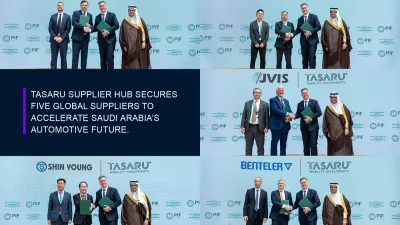
Breaking: TASARU Supplier Hub Signs 5 Global Tier-1 Suppliers for Saudi Auto Localization
TASARU Supplier Hub secures five global Tier-1 suppliers to localize critical automotive component manufacturing in Saudi Arabia, boosting Ceer and Lucid production.
Saudi Arabia Builds the Track: TASARU Hub Partners With 5 Global Giants to Make Cars Local
Saudi Arabia's TASARU Supplier Hub signs deals with five global Tier-1 suppliers to localize car part manufacturing, boosting Ceer & Lucid production and GCC's automotive future.

Saudi Auto Recycling Sector Shifts Towards Formalisation — What It Means for Car Owners
Saudi Arabia's auto recycling market is moving from informal scrap yards to licensed facilities, driven by Vision 2030 and stricter environmental laws. Here's how it affects parts availability, pricing, and ELV disposal.