
Just Launched: Lucid, Nuro & Uber Reveal Production Robotaxi at CES 2026 – Saudi Arabia Impact
The autonomous future just got real. At CES 2026 in Las Vegas, Lucid Group, Nuro, and Uber unveiled the production-intent version of their collaborative robotaxi—a major milestone that signals the imminent arrival of driverless ride-hailing services.
This isn't a concept car or a distant prototype. It's a production-ready vehicle that will hit the roads later this year, starting with the San Francisco Bay Area via Uber's network.
Here's why this matters for the GCC.

The Robotaxi: What We Know
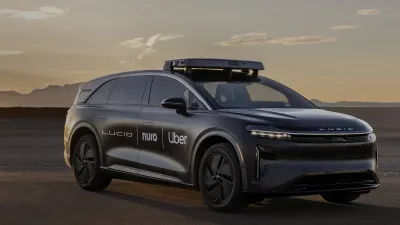
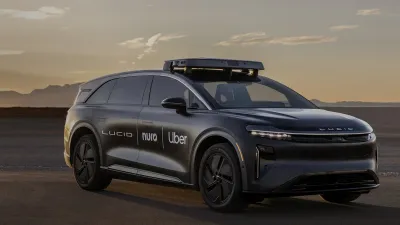
Built on the 2026 Lucid Air Gravity SUV platform, this robotaxi represents a fully integrated approach to autonomous vehicles. Unlike retrofitted solutions, the autonomy hardware is pre-integrated during manufacturing at Lucid's Casa Grande, Arizona factory.
That means lower costs and faster deployment.
The vehicle features a comprehensive sensor suite: high-resolution cameras, solid-state lidar sensors, and radars integrated directly into the bodywork. A distinctive roof-mounted 'halo' structure houses additional sensors and integrated LED lights for rider identification—similar to Waymo's approach.
At the heart of the system sits Nvidia's Drive AGX Thor computer, providing the computational power needed for real-time decision making in complex urban environments.
Inside the Robotaxi Experience
For riders, the experience is designed to be intuitive and reassuring. A rear screen displays an isometric 3D map of the vehicle's surroundings, showing exactly what the car "sees" in real-time.
You'll see your ETA, remaining ride time, and have access to climate and music controls. There's also a rider support button and a pull-over request feature for added peace of mind.
During the CES demo, the interface was non-interactive, but the production version will offer full functionality when it launches commercially.
Timeline and Testing
Development has been ongoing for over six months, with autonomous on-road testing led by Nuro starting in December 2025. The planned commercial launch is set for later in 2026, with initial deployment in the San Francisco Bay Area.
Uber's commitment is substantial: a $300 million investment in Lucid and a commitment to purchase 20,000 Lucid EVs for the robotaxi fleet.
This partnership represents a significant vote of confidence in Lucid's technology and manufacturing capabilities.
Why This Matters for Saudi Arabia and the GCC
The Saudi connection is impossible to ignore. Lucid is substantially backed by Saudi Arabia's Public Investment Fund (PIF), which has been instrumental in the company's growth and expansion plans.
More importantly, Lucid confirmed full-scale EV production in Saudi Arabia starting in 2026, with an ambitious target of 150,000 annual units by 2029. This manufacturing presence creates a natural pathway for robotaxi technology and services to expand into GCC markets.
Think about it: Saudi Arabia is already investing heavily in EV infrastructure and smart city initiatives. The introduction of autonomous ride-hailing services aligns perfectly with Vision 2030 goals around technology adoption and transportation innovation.
Regional Implications and Opportunities
For GCC consumers, this development signals several potential benefits. First, it could accelerate the adoption of autonomous vehicle technology in the region, with Saudi Arabia potentially serving as a launch market.
Second, it creates opportunities for local partnerships and service models tailored to GCC needs—think climate-optimized interiors for extreme summer heat, or specialized routing for desert and urban environments.
Third, it positions the region at the forefront of transportation technology rather than as a follower market.
The timing is particularly interesting. As Lucid ramps up Saudi production, the infrastructure and expertise needed for robotaxi deployment could be developed in parallel.
What's Next for the GCC
While specific pricing and availability details for GCC markets haven't been announced yet, the foundation is being laid. The PIF's involvement in Lucid creates natural synergies for bringing this technology to the region.
We expect to see pilot programs or announcements about GCC testing within the next 12-18 months, particularly as the Saudi manufacturing facility comes online.
For now, the focus remains on the U.S. launch and proving the technology in real-world conditions. But make no mistake: this robotaxi has significant implications for the future of transportation in the GCC.
The autonomous revolution is coming—and Saudi Arabia is positioned to be at the forefront.
Source: TechCrunch, Uber investor press release
Related Articles

Breaking: Saudi PIF Pumps $550M More Into Lucid as Uber Robotaxi Fleet Hits 35,000
Saudi Arabia's PIF boosts Lucid investment to $8 billion total as Uber commits to 35,000 EVs for global robotaxi service. Full production in Jeddah starts 2026.
Saudi-Backed Lucid, Uber, Nuro to Launch 20,000+ Robotaxis in 2026
Lucid Motors, backed by Saudi Arabia's PIF, partners with Uber and Nuro to launch a global robotaxi fleet of 20,000+ autonomous Gravity SUVs, starting in 2026.
Lucid, Nuro & Uber Unveil Luxury Robotaxi for 2026 Launch
The Lucid Gravity-based robotaxi, developed with Nuro and Uber, targets a 2026 commercial launch with ties to Lucid's Saudi production. Full details inside.