
Saudi Arabia to Build EVs From Scratch by End of 2026
Saudi Arabia is about to stop assembling cars from imported kits and start building them from the ground up. Lucid Group's Jeddah factory on the Red Sea coast will transition to full-scale electric vehicle manufacturing by the end of 2026, marking a historic first for the Kingdom's auto industry.

What's Changing at the Lucid Jeddah Plant?
Until now, the Lucid facility in Jeddah has operated as a semi-knocked-down (SKD) assembly plant — essentially putting together vehicles using parts shipped from Lucid's main factory in Casa Grande, Arizona. That changes by the end of 2026.
The plant will add body fabrication, full painting, final assembly, and complete vehicle testing to its capabilities. In other words, a Lucid Air rolling off the Jeddah line will be born on Saudi soil, not just finished there.
Lucid interim CEO Marc Winterhoff confirmed the company is "preparing to transition from vehicle assembly to full electric vehicle manufacturing," a move that will create new jobs, build local engineering expertise, and develop a broader EV industrial ecosystem across the Kingdom.
Why This Matters for the GCC
Here's the thing: this isn't just a Saudi story. The Jeddah facility is designed to serve both local GCC demand and international export markets. That has direct implications for buyers across the region.
- More localized pricing — Manufacturing locally eliminates import duties and shipping costs that currently inflate EV prices in the Gulf.
- Better availability — Shorter supply chains mean faster delivery times for customers in Saudi Arabia, the UAE, Kuwait, and beyond.
- Stronger after-sales support — A full production facility brings with it a deeper parts inventory and more trained technicians regionally.
- GCC-spec vehicles — Cars built in Jeddah will be engineered and tested for the region's extreme heat and driving conditions from day one.
And the best part? This positions Saudi Arabia as the EV production and export hub for the entire Middle East, fundamentally shifting how electric cars reach GCC buyers.
How Does This Tie Into Saudi Vision 2030?
This transition isn't happening in a vacuum. It's a cornerstone of Saudi Vision 2030, the Kingdom's sweeping plan to diversify its economy away from oil dependence. The Public Investment Fund (PIF) — Lucid's largest shareholder — has been the financial engine behind this push.
By building a domestic EV manufacturing base, Saudi Arabia achieves several Vision 2030 objectives simultaneously:
- Economic diversification — High-value manufacturing reduces reliance on hydrocarbon revenues.
- Job creation — Full production requires engineers, technicians, and supply chain workers, not just assembly-line staff.
- Technology transfer — Local R&D and testing capabilities build long-term intellectual capital.
- Export revenue — The Jeddah plant's output won't stay in the Kingdom; it's earmarked for global markets.
The PIF's backing ensures Lucid has the capital runway to execute this transition, even as the broader EV market navigates pricing pressures and demand fluctuations.
Production Timeline: What to Expect and When
The ramp-up is already underway. Output and deliveries from the Jeddah facility have been increasing, with a significant surge expected through 2025 as assembly operations scale up ahead of the full manufacturing transition.
But the real headline number comes further down the road:
- End of 2026 — Full EV manufacturing begins (body fabrication, assembly, and testing).
- 2029 — The Jeddah plant targets full capacity of up to 150,000 vehicles per year.
That 150,000-unit target would make the Jeddah facility one of the largest EV plants in the Middle East and a serious player on the global stage. For context, that's roughly equivalent to what many mid-size European auto factories produce annually.
What About CEER and the Bigger Saudi EV Picture?
Lucid isn't the only game in town. CEER, the Saudi-owned EV brand backed by PIF and Foxconn, is also positioning 2026 as the start of a new chapter for the Kingdom's auto industry. While specific model details from CEER remain limited, the dual-track approach — a premium American-Saudi brand in Lucid and a homegrown brand in CEER — signals that Saudi Arabia is serious about building an entire EV ecosystem, not just hosting a single factory.
Together, these developments could transform the GCC from a car-importing region into a car-producing one within the next decade.
What GCC Buyers Should Watch For
If you're in the market for a Lucid Air or any premium EV in the Gulf, this manufacturing shift could reshape your ownership experience. Here's what to keep an eye on:
- Pricing adjustments once locally manufactured units hit showrooms — potentially lower than current imported pricing.
- New Lucid models that may be prioritized for Jeddah production, including the upcoming Gravity SUV and more affordable Project E2 sedan.
- Dealership network expansion as production scales up and Lucid needs more retail and service touchpoints across the GCC.
- Resale value implications — locally built and supported vehicles tend to hold value better in their home markets.
The shift to full EV manufacturing in Saudi Arabia isn't a distant prospect — it's months away. By this time next year, the Kingdom could be producing complete electric vehicles from its own soil, and the ripple effects will be felt in every GCC showroom.
Related Articles
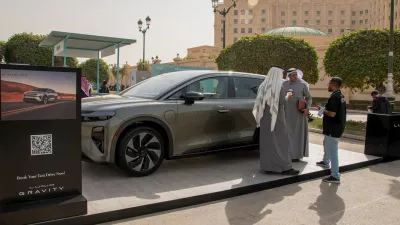
Lucid Starts Full EV Manufacturing in Saudi Arabia by End-2026
Lucid Motors confirms its KAEC plant will transition to full EV manufacturing by end-2026, ramping to 150,000 units/year by 2029 — a major milestone for Saudi Arabia's Vision 2030.
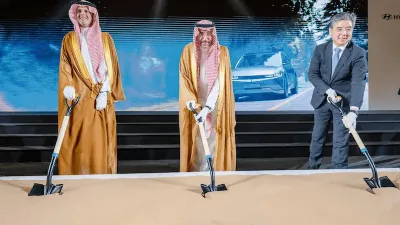
PIF-Hyundai Saudi Plant: 50,000 Vehicles From Q4 2026
PIF and Hyundai's joint venture will produce 50,000 vehicles annually in Saudi Arabia from Q4 2026, including ICE and EV models — a milestone for GCC auto manufacturing.
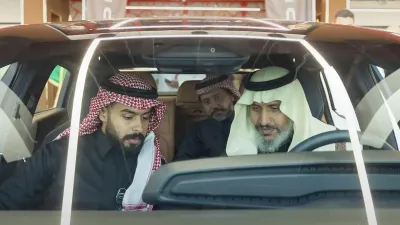
Lucid Plans Aggressive GCC Expansion: 1-2 New Markets Yearly
Lucid Motors will enter 1–2 new GCC countries every year, targeting Kuwait, Bahrain, Oman, and Qatar. Here's what the luxury EV maker's regional push means for Gulf drivers.