
Breaking: Saudi Arabia Launches First Self-Driving Route in Riyadh
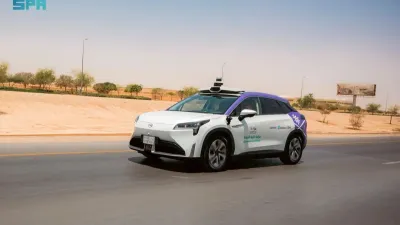
Saudi Arabia has officially launched its first autonomous vehicle passenger route in Riyadh, marking a historic leap for smart mobility in the kingdom. The Transport General Authority (TGA) unveiled the new 4.8-kilometer route connecting Hayat Mall and Riyadh Gallery, putting self-driving technology directly into public service.
This isn't a pilot project—it's a fully operational route that began carrying passengers on March 30-31, 2026. The launch represents a concrete step toward the futuristic transportation goals outlined in Saudi Arabia's Vision 2030.

What is the New Autonomous Vehicle Route?
The route stretches 4.8 kilometers between two of Riyadh's major commercial hubs: Hayat Mall and Riyadh Gallery. This strategic connection serves thousands of shoppers and residents daily, offering a glimpse into a driverless future.
Vehicles operate daily from 10:00 AM to 10:00 PM, providing consistent service throughout the week. Perhaps the most attractive feature for early adopters? The rides are completely free for all passengers.
Here's the thing: This service operates under the direct regulatory and technical supervision of the TGA. Every trip is monitored to ensure maximum safety and smooth operation, blending innovation with rigorous oversight.
Previous Phase Success and Safety Record
This launch follows extensive testing that proved the technology's readiness for Riyadh's unique environment. Before this public route opened, autonomous vehicles completed a remarkable trial phase.
During testing, vehicles made over 1,700 trips and transported more than 3,000 passengers. They covered a total distance of 30,000 kilometers—equivalent to driving from Riyadh to Jeddah and back more than six times.
That's not just impressive mileage; it's validation. These vehicles have already navigated Riyadh's streets, traffic patterns, and climate conditions successfully. The extensive testing provides confidence in both the technology's reliability and its adaptation to local conditions.
GCC Context: Riyadh's Smart Mobility Push
Saudi Arabia's move positions Riyadh at the forefront of autonomous vehicle adoption in the GCC region. While Dubai has tested self-driving taxis and Abu Dhabi has explored autonomous pods, Saudi Arabia is now rolling out actual passenger routes as part of a broader expansion plan.
This matters for GCC residents because it demonstrates how rapidly smart mobility is evolving in our region. The intense summer heat, complex urban traffic, and car-centric lifestyles present unique challenges that autonomous technology must overcome.
And the best part? The TGA has confirmed this is just the beginning. The Hayat Mall-Riyadh Gallery route represents the first of what will be multiple autonomous transport services across various locations in Saudi Arabia.
How the Service Operates and Who Can Ride
The service is designed for maximum accessibility. Passengers can simply arrive at designated stops along the route during operating hours and board the autonomous vehicles. No prior booking or special apps are required—at least for this initial phase.
Advanced safety features and smart technology are integrated throughout the vehicles. While specific vehicle models aren't disclosed in official announcements, they're likely similar to autonomous shuttles seen in other global smart cities, built to handle urban environments safely.
The TGA's direct supervision ensures that every aspect of the operation meets stringent safety standards. This is crucial for building public trust in a region where personal car ownership has long been the dominant transportation mode.
What This Means for Future Transportation in Saudi Arabia
This launch signals a fundamental shift in how Saudi Arabia approaches urban mobility. Under Vision 2030, the kingdom aims to diversify its economy and transform its cities into smarter, more efficient hubs.
Autonomous vehicles could dramatically reduce traffic congestion, lower transportation costs, and decrease carbon emissions—all pressing issues in rapidly growing GCC cities. For car buyers, this evolution might eventually change how we think about vehicle ownership.
But that's not all. The successful implementation of this route could accelerate similar projects across the kingdom. Imagine autonomous connections between business districts, universities, and residential areas—all operating seamlessly in the GCC climate.
What's Next for Autonomous Vehicles in the GCC?
The Riyadh route is just the opening chapter. The TGA has indicated that this forms part of a comprehensive plan to expand autonomous transport services throughout Saudi Arabia. More routes in different cities will likely follow as the technology proves itself.
For other GCC nations, Saudi Arabia's move creates both inspiration and healthy competition. We can expect accelerated autonomous vehicle initiatives across the UAE, Qatar, and other neighboring countries as the regional race toward smart mobility heats up.
The next 12-24 months will be critical. Watch for announcements about extended operating hours, additional routes, and potentially even integration with existing public transportation systems. The success of this initial route will determine the pace of future expansion.
One thing is clear: The era of autonomous vehicles in the GCC is no longer a distant future concept—it's here, operational, and carrying passengers right now in Riyadh. As these services expand, they could fundamentally reshape how we move through our cities, offering alternatives to traditional car ownership while advancing sustainability goals.
For now, if you're in Riyadh, you can experience this future firsthand. Head to Hayat Mall or Riyadh Gallery between 10 AM and 10 PM, and take a free ride into the next generation of transportation.
Related Articles
Saudi Arabia Expands Autonomous Mobility With New Riyadh Route
The Transport General Authority launches a new self-driving vehicle route connecting Hayat Mall and Riyadh Gallery. Daily service with advanced safety tech follows a successful pilot phase.

Saudi Auto Recycling Sector Shifts Towards Formalisation — What It Means for Car Owners
Saudi Arabia's auto recycling market is moving from informal scrap yards to licensed facilities, driven by Vision 2030 and stricter environmental laws. Here's how it affects parts availability, pricing, and ELV disposal.

CEER Signs SAR 3.7B Deals for Saudi EV Localization Push
CEER inks 16 agreements worth over SAR 3.7 billion at PIF Forum, targeting 45% localization of EV components from Saudi companies by 2034.