
Ceer: Saudi Arabia's First EV Brand Targets 2026 Launch
Saudi Arabia is about to change the GCC automotive landscape forever. Ceer, the kingdom's first homegrown electric vehicle brand, is on track to begin production in 2026 — and it's bringing sedans and SUVs built specifically for regional drivers.
Backed by the Public Investment Fund (PIF) and operating under the Vision 2030 framework spearheaded by Crown Prince Mohammed Bin Salman, Ceer represents Saudi Arabia's most ambitious push into automotive manufacturing. And the momentum is accelerating fast.

What Is Ceer and Why Does It Matter?
Ceer is Saudi Arabia's first domestically produced electric vehicle brand. The name itself signals intent — it's a distinctly Saudi entry into a global EV race that's been dominated by American, Chinese, and European players.
The brand will produce both sedans and SUVs, with vehicles engineered to handle the unique demands of GCC driving. That means accounting for extreme summer heat, long highway stretches, and the stop-and-go traffic of cities like Riyadh, Jeddah, and Dubai.
Here's why this matters for the region: until now, the GCC has been a consumer of EVs, not a producer. Ceer flips that script. If successful, it positions Saudi Arabia as a regional EV manufacturing hub — something that could reshape pricing, availability, and even government incentives across the Gulf.
SR5.5 Billion in Deals: Ceer Is Serious
At a recent PIF event, Ceer signed 11 deals worth SR5.5 billion (approximately $1.4 billion). That's not a tentative step into the market — that's a full-throttle commitment.
These agreements span the supply chain, from components to technology partnerships, and signal that Ceer is building a robust local ecosystem rather than simply assembling imported kits. The scale of investment suggests the brand is targeting meaningful production volumes, not just a symbolic niche run.
But that's not all. The broader goal is even more ambitious.
Vision 2030 and the 45% Localization Target
Ceer isn't just a car company — it's a pillar of Saudi Arabia's Vision 2030 economic diversification strategy. The brand aims to achieve 45% localization in the automotive industry by 2034, a target that would create thousands of jobs and develop a domestic supply chain from the ground up.
Production will be based in King Abdullah Economic City (KAEC), strategically located on the Red Sea coast. The facility is expected to serve both domestic demand and export markets across the GCC and potentially beyond.
For Saudi consumers, this local production could mean competitive pricing, faster delivery times, and vehicles specifically calibrated for regional conditions — something imported EVs often overlook.
What Models Will Ceer Build?
While Ceer has confirmed plans for sedans and SUVs, specific model names, specs, and pricing have not yet been announced. The brand has kept details close to the chest during this pre-launch phase.
What we do know:
- Body styles: Sedans and SUVs confirmed
- Powertrain: Fully electric — no hybrids or combustion variants planned
- Regional focus: Vehicles will be tailored for GCC conditions, including extreme heat performance and desert-ready components
- Production location: King Abdullah Economic City, Saudi Arabia
- Target launch: 2026
The emphasis on regional suitability is worth watching. If Ceer delivers on heat-resistant battery management, sand-proof sealing, and climate-optimized cabin systems, it could have a genuine edge over imported EVs that weren't designed with 50°C summers in mind.
How Ceer Compares to Other GCC EV Efforts
Saudi Arabia isn't starting from zero in the EV space. The kingdom already hosts Lucid Motors' manufacturing facility, which assembles vehicles in Jeddah. But there's a key difference: Lucid is an American brand manufacturing in Saudi Arabia. Ceer is a Saudi brand, period.
That distinction matters for national strategy, supply chain development, and brand identity. Ceer is the kingdom's answer to the question: "Can the GCC build its own EV from the ground up?"
Regionally, Ceer will likely face competition from Chinese EV brands like BYD that are aggressively expanding across the GCC with affordable models. The pricing strategy Ceer adopts — whether it targets the mass market or positions itself as a premium offering — will be critical.
What This Means for GCC Buyers
If you're a car buyer in the UAE, Saudi Arabia, or anywhere in the Gulf, Ceer's arrival is relevant even if you never buy one. Here's why:
- More competition means better prices and features across all EV brands
- Local manufacturing could mean faster access to spare parts and service
- GCC-specific engineering could solve real pain points like battery degradation in extreme heat
- Government incentives for locally produced EVs could make Ceer models significantly more affordable than imports
Saudi Arabia's government has already shown willingness to incentivize EV adoption, and a homegrown brand is likely to receive strong institutional support.
What's Next for Ceer?
The next 12 to 18 months will be telling. Ceer is expected to reveal its first production-ready models ahead of the 2026 launch, with test drives potentially becoming available at Saudi dealerships by late 2025 or early 2026.
Key milestones to watch:
- Model reveal and naming announcement — likely in late 2025
- Pricing confirmation — expected closer to launch, with potential Saudi-first availability
- Dealership network rollout — partnerships with local distributors across the GCC
- Pre-order opening — watch for early-bird reservation programs
The 2026 Ceer EV launch isn't just another car debut. It's a statement that the GCC can build its own electric future — on its own terms, in its own factories, for its own roads. We'll be tracking every development as it happens.
Related Articles
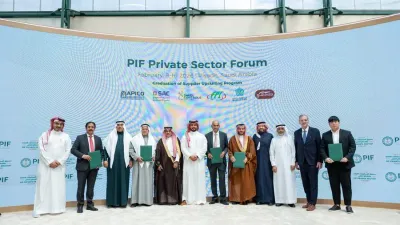
CEER Signs SAR 3.7B Deals for Saudi EV Localization Push
CEER inks 16 agreements worth over SAR 3.7 billion at PIF Forum, targeting 45% localization of EV components from Saudi companies by 2034.
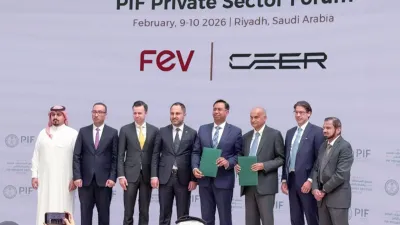
CEER Signs SAR 3.7B in Deals, Targets 45% Saudi Localization by 2034
Saudi Arabia's first EV brand CEER signs 16 MoUs worth over SAR 3.7 billion at PIF Private Sector Forum, targeting 45% localization by 2034 ahead of 2026 vehicle launches.
Ceer Signs SAR 5.5 Billion in Saudi Deals to Accelerate 2026 EV Launch
Saudi Arabia's first EV brand Ceer secures 11 partnerships worth SAR 5.5 billion with local firms to build supply chain ahead of 2026 model launch.