
CEER Signs SAR 3.7B in Deals, Targets 45% Saudi Localization by 2034
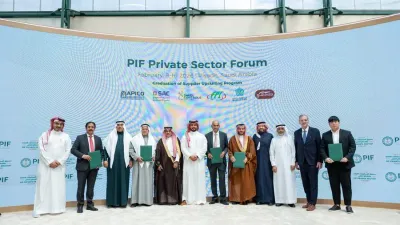
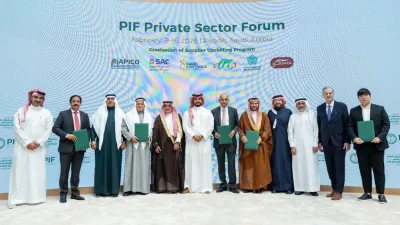
Saudi Arabia’s first homegrown electric vehicle brand has just made its biggest move yet. CEER signed 16 commercial agreements worth over SAR 3.7 billion at the 4th PIF Private Sector Forum in Riyadh, targeting 45% localization of vehicle materials and components from Saudi suppliers by 2034.
The deals are a cornerstone of the brand's aggressive localization strategy as it prepares to reveal its first flagship models later this year. With 2026 declared "the year of CEER," the brand is building a complete automotive ecosystem in the Kingdom.

What This SAR 3.7 Billion Deal Means for Saudi EV Production
CEER isn't just assembling cars in Saudi Arabia—it's building an entire supply chain from the ground up. These 16 new Memorandums of Understanding (MoUs) represent a massive step toward that goal, building on the SAR 5.5 billion in agreements signed last year.
The target is clear: source 45% of vehicle materials and components from Saudi companies within the next decade. This goes far beyond basic assembly operations.
CEER is utilizing local raw materials and empowering Saudi companies to become global suppliers. The strategy directly supports Vision 2030's economic diversification goals, creating jobs and reducing carbon emissions through localized EV production.
CEER's Partnership with German Engineering Giant FEV
On the sidelines of the same forum, CEER signed a strategic MoU with FEV, a leading German engineering firm. This partnership focuses on innovation, industrial expansion, and critical knowledge transfer to build a local supplier ecosystem.
Johnny Saldanha, CEER's Chief Procurement Officer, highlighted the importance of this collaboration. "Very special thanks to our suppliers, like FEV... big enabler to develop the Automotive Industrial Cluster in Saudi Arabia," he stated.
Mayank Agochiya, FEV Asia President, emphasized the mutual benefits. "By partnering with CEER, we will combine our global expertise... contribute to a competitive and sustainable automotive ecosystem."
This German partnership brings world-class engineering expertise directly to Saudi Arabia's growing automotive sector.
The CEER Background Story: From Concept to Reality
CEER was founded in 2022 through a joint venture between Saudi Arabia's Public Investment Fund (PIF) and Taiwanese electronics giant Foxconn. The brand represents Saudi Arabia's first original equipment manufacturer (OEM) dedicated exclusively to electric vehicles.
Production will take place at the CEER Manufacturing Complex in King Abdullah Economic City (KAEC). Vehicles will be based on Foxconn's Foxtron EV platforms, combining cutting-edge technology with regional design considerations.
The brand has been building its capabilities through strategic partnerships. Previous agreements include licensing BMW components, collaborating with Rimac on powertrain technology, and installing a Dürr advanced paint shop earlier this year.
Why Localization Matters for GCC Electric Vehicle Buyers
For consumers in Saudi Arabia and across the GCC, localization means more than just national pride. It translates to tangible benefits that will be felt when CEER's vehicles hit the road.
Localized production can lead to better pricing competitiveness against imported EVs. It also means parts availability and service support are inherently faster and more reliable within the region.
Saudi-specific adaptations become standard. Think enhanced cooling systems for desert heat, durable materials suited for local conditions, and software optimized for GCC driving patterns.
But here's the real advantage: reduced supply chain vulnerabilities. Unlike imported vehicles subject to global shipping delays, CEER's localized production means more predictable delivery timelines for Saudi customers.
How CEER Compares to Other EV Players in the Region
The Saudi EV market is heating up with multiple players vying for dominance. CEER enters a landscape that includes Saudi-backed Lucid, expanding Tesla operations, and Chinese giant BYD's growing regional presence.
CEER's differentiation is clear—it's the only EV brand born and built in Saudi Arabia, for Saudi Arabia and the wider GCC. While Lucid has Saudi investment and plans for local assembly, CEER represents full-scale indigenous manufacturing.
The localization strategy gives CEER a unique edge. While competitors import most components, CEER's 45% localization target means more economic value stays within the Kingdom, potentially translating to government support and consumer preference.
The 2026 CEER Vehicle Launch Timeline
After initial delays, CEER is firmly on track for its 2026 debut. The brand will reveal its first flagship models this year, with production scheduled to begin in the fourth quarter.
Two initial models are expected: a sedan and an SUV. Both will be designed specifically for Middle Eastern conditions while incorporating global EV technology standards.
CEER CEO James DeLuca has been clear about the timeline. "2026 is the year of CEER," he declared. "We will reveal our first flagship models, visionary design, breakthrough technology, exhilarating performance, built for this region."
The vehicles will showcase what Saudi automotive engineering can achieve when combined with global partnerships and local manufacturing expertise.
Saudi Vision 2030: The Bigger Picture for CEER's Strategy
CEER isn't just building cars—it's building an industry. The brand's localization strategy aligns perfectly with Saudi Arabia's Vision 2030 goals for economic diversification, job creation, and technological advancement.
The automotive sector represents a massive opportunity for Saudi industrialization. Before CEER, the Kingdom imported nearly all its vehicles. Now, it's creating an export-ready automotive manufacturing hub.
Every component sourced locally means less dependence on oil revenues. Every job created in the automotive sector means a more diversified economy. Every EV produced means progress toward Saudi Arabia's sustainability goals.
This is about transforming Saudi Arabia from an automotive market to an automotive manufacturing powerhouse.
What's Next for CEER and Saudi EV Production
The coming months will be critical for CEER as it moves from agreements to action. Suppliers will begin ramping up production capabilities, the manufacturing complex will finalize preparations, and the first vehicles will enter pre-production phases.
Consumers can expect more detailed reveals of CEER's initial models later this year. While specific pricing, horsepower figures, and exact specifications remain under wraps, the brand has promised "breakthrough technology" and "exhilarating performance."
Dealership networks and service centers will need to be established across Saudi Arabia and potentially throughout the GCC. Charging infrastructure partnerships may also be announced as part of a complete EV ecosystem.
One thing is certain: Saudi Arabia's automotive landscape will never be the same. CEER's SAR 3.7 billion in new agreements represents more than just business deals—it represents the birth of a new industrial sector in the Kingdom.
The countdown to 2026 has officially begun.
Related Articles
CEER Signs SAR 3.7B Deals for Saudi EV Localization Push
CEER inks 16 agreements worth over SAR 3.7 billion at PIF Forum, targeting 45% localization of EV components from Saudi companies by 2034.
Ceer Signs SAR 3.7 Billion in Deals at PIF Forum, Targets 45% Saudi Localization by 2034
Saudi EV brand Ceer signs SAR 3.7 billion in deals to source 45% of components locally by 2034, paving the way for seven new models and transforming the GCC car market.
Ceer Signs SAR 5.5 Billion in Saudi Deals to Accelerate 2026 EV Launch
Saudi Arabia's first EV brand Ceer secures 11 partnerships worth SAR 5.5 billion with local firms to build supply chain ahead of 2026 model launch.