
Tesla Builds First Production Cybercab: $25K Robotaxi Reality Check
The future of urban mobility just took a tangible step forward in Austin, Texas. On February 17, 2026, Tesla announced the first production unit of its long-awaited, purpose-built Cybercab robotaxi has officially rolled off the assembly line at Gigafactory Texas, marking a critical manufacturing milestone for the autonomous vehicle revolution.

What Is the Tesla Cybercab?
Forget retrofitted sedans. The Cybercab is Tesla's ground-up vision for a driverless future. It’s a compact, two-seater pod designed exclusively for autonomous ride-hailing. The most striking feature? There is no steering wheel and no pedals. The vehicle relies entirely on Tesla's Full Self-Driving (FSD) software suite to navigate. It features distinctive butterfly doors and is built for high-volume, low-cost production—a key differentiator from competitors.
Elon Musk celebrated the moment on X, posting: “Congratulations to the Tesla team on making the first production Cybercab!” This single unit represents the culmination of years of development since the vehicle's initial unveiling.
Cybercab Specs, Price, and Production Timeline
So, what are the hard facts? The target price is aggressive, aimed at under $30,000, with Musk previously citing a figure around $25,000. This positions it as a potentially mass-market product, available for individual purchase, not just fleet operators.
However, don't expect to see a flood of them just yet. While the first unit is built, continuous production is not scheduled to begin until April 2026. Initial ramp-up will be slow as Tesla works out the kinks of a brand-new vehicle design. The long-term ambition, however, is staggering: a production goal of 2 million units per year.
The Reality Check: Autonomous Driving Status
Here's the crucial context. Building the car is one thing; making it drive safely and reliably on its own is another. Tesla is currently running a robotaxi pilot program in Austin and San Francisco using modified 2026 Tesla Model Y vehicles. The latest data reveals significant challenges.
According to a recent status check, these pilot vehicles are involved in a crash every 57,000 miles, compared to a human driver average of one every 229,000 miles—nearly four times worse. Furthermore, the vehicles only showed 19% availability over a 48-hour period and often operated with safety monitors or trailing chase cars.
Tesla's own projection suggests it needs to accumulate roughly 10 billion miles of data to achieve unsupervised, truly driverless operation, a milestone not expected before July 2026. Adding to the hurdles, the NHTSA is investigating FSD for traffic violations across 2.9 million Tesla vehicles.
The Regulatory Hurdle for a Wheel-Less Car
The Cybercab's lack of human controls creates another major obstacle: regulation. In the US, it requires federal exemptions to operate on public roads, similar to those granted to Amazon's Zoox for its operations in Las Vegas and San Francisco. Approval will also involve navigating a complex patchwork of state-by-state rules for autonomous vehicle registration and insurance.
This regulatory maze is a key reason why widespread deployment will follow production, not coincide with it.
What Does This Mean for the GCC?
For tech-forward markets like the UAE and Saudi Arabia, the Cybercab's arrival on the production line signals a future possibility. Tesla has been deepening its GCC presence, with 2026 Tesla Cybertruck deliveries beginning in the UAE in January 2026 and the brand re-entering the Saudi market.
While no specific Cybercab launch plans for the Middle East have been announced, it positions Tesla directly against regional electric and autonomous mobility projects. Saudi Arabia, for instance, has shown strong interest in autonomy through ventures like the potential collaboration between Lucid, Uber, and Nuro for robotaxis. The Cybercab could appeal to GCC nations investing in smart city infrastructure and looking to reduce urban congestion.
How It Stacks Up Against the Competition
Tesla is entering a field with established players. Alphabet's Waymo operates a fleet of over 2,500 vehicles, while Zoox has its own purpose-built robotaxi. Tesla's current pilot fleet is estimated at around 200 vehicles across two cities.
Tesla's bet isn't on having the first or most refined system, but on achieving unbeatable scale and cost-efficiency through vertical integration and massive manufacturing capacity—the same strategy used for the 2026 Tesla Model 3.
The Road Ahead for the Cybercab
The first production Cybercab is a symbolic and engineering victory. It proves Tesla can manufacture the radical vehicle it promised. The next 12 months will be about transforming that proof-of-concept into a reliable, regulatory-approved product.
The timeline looks like this: slow production ramp begins in April 2026, followed by an intense period of real-world testing, data collection, and software refinement to reach the safety benchmarks required for unsupervised use. Only then can the true robotaxi network begin to scale.
For consumers in the GCC and globally, the Cybercab moving from render to reality brings the prospect of affordable, on-demand autonomous transport closer. But as the data from current pilots shows, the hardest part—perfecting the "self-driving" bit—is still very much a work in progress. The race to autonomy is a marathon, and Tesla has just passed a visible mile marker.
Source: Electrek.co, BusinessInsider.com, RoboHorizon.com
Related Articles
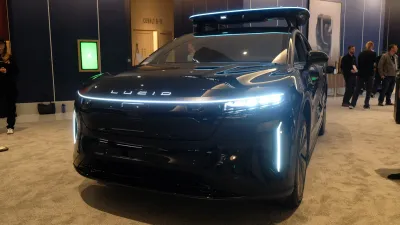
Just Launched: Saudi-Backed Lucid, Nuro & Uber Unveil Gravity-Based Robotaxi for Global 2026 Rollout
Saudi-backed Lucid partners with Nuro and Uber to launch 20,000+ autonomous Gravity SUVs for global robotaxi fleet starting late 2026. Full details inside.
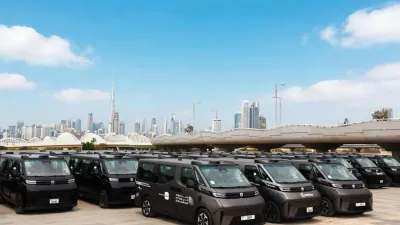
Uber-WeRide Robotaxis Launch in Dubai: Fully Driverless Now
Dubai becomes first city with commercial Uber-WeRide robotaxis operating without safety drivers. Book via Uber app in select areas. A major milestone for autonomous mobility in the GCC.
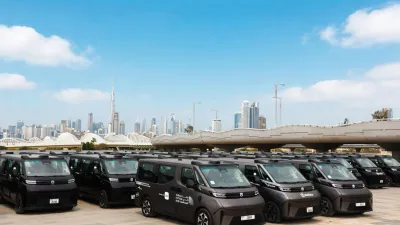
Uber and WeRide Launch Fully Driverless Robotaxi Service in Dubai
Dubai riders can now hail fully driverless robotaxis via the Uber app. Here's everything you need to know about the groundbreaking commercial service.