
Just Launched: Sheikh Hamdan Rolls Out Dubai's First Autonomous RT6 Robotaxi Service
Dubai has officially entered the autonomous mobility era. On February 5, 2026, Sheikh Hamdan bin Mohammed bin Rashid Al Maktoum, Crown Prince of Dubai and Chairman of The Executive Council, launched commercial operations of fully autonomous RT6 robotaxi vehicles developed by Baidu Apollo Go.
This marks the first large-scale deployment of driverless taxis in the GCC region. Sheikh Hamdan himself took the inaugural ride in a driverless RT6 taxi to the World Governments Summit 2026 at Madinat Jumeirah, where he was briefed on the vehicle's AI-driven operation.
Here's what you need to know about this groundbreaking development.

What Is the Baidu Apollo Go RT6 Robotaxi?
The RT6 represents the sixth-generation autonomous taxi specifically designed for commercial deployment. This isn't a prototype or limited test—it's a production-ready vehicle built to handle Dubai's unique urban environment.
The vehicle comes equipped with over 40 advanced sensors, including high-precision LiDAR, multi-band radars, and high-resolution cameras that provide 360-degree perception. This sensor suite enables real-time obstacle detection and decision-making in complex traffic scenarios.
But that's not all. The AI software integrates real-time data, high-definition maps, and deep-learning algorithms to navigate urban environments while complying with traffic laws and safely interacting with pedestrians and other vehicles.
Baidu Apollo Go brings impressive credentials to Dubai: 150+ million kilometers of autonomous driving experience and 10+ million completed trips globally. This isn't their first rodeo—they're applying proven technology to Dubai's streets.
When Can Dubai Residents Use the Service?
The public rollout is scheduled for Q1 2026, with March being the target month for widespread availability. The initial phase will add 100 self-driving vehicles to Dubai's transportation fleet.
This rapid deployment follows just 10 months from initial discussions at the 2025 World Governments Summit to commercial operations—a testament to Dubai's regulatory efficiency and commitment to smart infrastructure.
Sheikh Hamdan emphasized this point in his statement: "The future of mobility in Dubai will be smarter, safer, more efficient, and more inclusive. We are turning vision into reality, building sustainable transport..."
How Does This Fit Into Dubai's Transportation Strategy?
This launch represents a major milestone in Dubai's Self-Driving Transport Strategy, which aims for 25% of all transportation transactions to be autonomous by 2030. The RT6 service isn't just a pilot project—it's a strategic step toward that ambitious goal.
The collaboration involves key players: Dubai's Roads and Transport Authority (RTA), Baidu Apollo Go, and Uber (which announced its partnership on February 10, 2026). This multi-stakeholder approach ensures both technological excellence and practical integration into existing transportation networks.
And the infrastructure is already in place. Baidu Apollo Go has inaugurated its first overseas operations center at Dubai Science Park—a 2,000 square meter facility housing a command center, simulation and training rooms, maintenance facilities, and safety testing areas.
What Makes This Launch Significant for the GCC?
This isn't just another technology demonstration. Baidu received its first driverless permit in the UAE just last month, making this one of the fastest regulatory approvals for autonomous vehicles in the region.
The launch positions Dubai as a clear leader in autonomous transport within the GCC. Other regional cities will likely look to Dubai's model as they develop their own smart mobility strategies.
For residents and visitors, this means:
- New transportation options in a city known for innovation
- Potential cost efficiencies as autonomous fleets scale
- Enhanced safety through AI-driven decision making
- Reduced congestion through optimized routing
The inauguration was attended by key figures including Omar Sultan Al Olama, Minister of State for Artificial Intelligence and Digital Economy, and Mattar Al Tayer, RTA Director General and Chairman. Their presence underscores the government-wide commitment to this initiative.
What's Next for Autonomous Mobility in Dubai?
The RT6 launch is just the beginning. With 100 vehicles hitting the streets in March 2026, Dubai residents will soon experience driverless transportation as part of their daily lives.
The partnership with Uber means you'll likely be able to hail these autonomous vehicles through familiar ride-hailing apps. This seamless integration into existing services makes adoption smoother for users accustomed to traditional ride-hailing.
Looking ahead, expect to see:
- Expansion of the fleet beyond the initial 100 vehicles
- New routes and coverage areas as the system proves itself
- Integration with public transportation for first/last mile solutions
- Potential expansion to other Emirates following Dubai's success
Dubai's summer heat and unique urban environment provide the ultimate testing ground for autonomous technology. If these vehicles can handle Dubai's challenging conditions, they can handle almost anywhere.
The Bottom Line
Sheikh Hamdan's ride in the RT6 robotaxi wasn't just a ceremonial gesture—it was a statement. Dubai is serious about leading the autonomous mobility revolution, and they're moving faster than anyone expected.
For GCC residents, this means the future of transportation is arriving sooner than anticipated. The days of driverless taxis being science fiction are over—they're now a commercial reality in Dubai.
As Sheikh Hamdan noted, Dubai is turning vision into reality. The RT6 service represents more than just new vehicles on the road—it represents a fundamental shift in how we think about urban mobility in the region.
Source: Gulf News, The National, Gulf Business
Related Articles
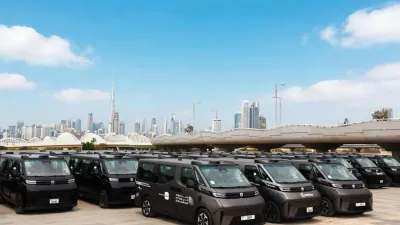
Uber-WeRide Robotaxis Launch in Dubai: Fully Driverless Now
Dubai becomes first city with commercial Uber-WeRide robotaxis operating without safety drivers. Book via Uber app in select areas. A major milestone for autonomous mobility in the GCC.
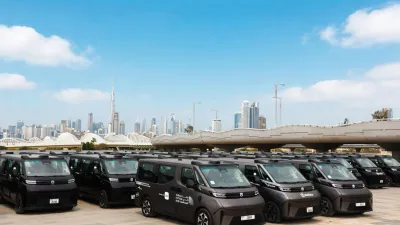
Uber and WeRide Launch Fully Driverless Robotaxi Service in Dubai
Dubai riders can now hail fully driverless robotaxis via the Uber app. Here's everything you need to know about the groundbreaking commercial service.
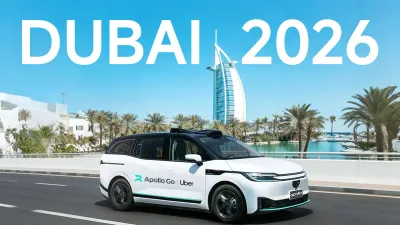
Just Launched: Baidu Apollo Go Robotaxis Hit Dubai Streets Via Uber
Baidu's Apollo Go robotaxis are coming to Dubai via the Uber app. Starting in Jumeirah, this driverless service marks a major leap for autonomous mobility in the GCC. Here's everything you need to know.