
GM Completes GCC Road Mapping for Super Cruise Launch
GM has officially completed its digital LiDAR road mapping across several GCC countries — and that means hands-free driving is closer to Middle East highways than ever before. The milestone clears the biggest technical hurdle for launching Super Cruise, GM's flagship driver assistance system, in the region.

What Is GM Super Cruise?
Super Cruise is GM's answer to semi-autonomous driving. It allows fully hands-free driving on compatible highways, using a combination of precision LiDAR maps, real-time cameras, radar sensors, and GPS data. Unlike basic adaptive cruise control, Super Cruise actively steers, accelerates, and brakes for you — while monitoring your attention through a driver-facing camera.
Here's the thing: the system only works on roads that have been meticulously mapped in advance. That's why completing the GCC road mapping is such a critical step. Without those maps, Super Cruise simply cannot function.
Why the GCC Road Mapping Matters
GM deployed LiDAR-equipped vehicles across the GCC to capture an enormous amount of road data. The mapping process records:
- Lane geometry and markings — every curve, split, and merge
- Road curvature and elevation changes — critical for smooth steering inputs
- Signage and landmarks — used for precise GPS positioning
- Highway interchanges and exits — where driver handoff is triggered
This data creates a digital twin of each mapped road, allowing Super Cruise to know exactly what's coming before the car's sensors even see it. The result is smoother, safer hands-free operation — especially at highway speeds.
In the US, GM has mapped over 750,000 miles of compatible roads. The GCC effort, while smaller in scale, focuses on the region's most critical high-speed corridors — the highways where Super Cruise delivers the most value.
Which GCC Countries Were Mapped?
While GM hasn't published a definitive country-by-country list, the mapping program is understood to cover the UAE and Saudi Arabia as priority markets, with likely extensions into other GCC states. These two markets represent the largest volumes for GM's premium brands — Cadillac, Chevrolet, and GMC — in the region.
And the best part? The timing aligns perfectly with the region's ambitious national agendas. Saudi Arabia's Vision 2030 and the UAE's Vision 2040 both emphasize smart mobility, sustainable transport, and technology adoption. GM's investment in local infrastructure directly supports those goals.
When Will Super Cruise Launch in the GCC?
GM has not yet confirmed an official launch date for Super Cruise in the Middle East. However, completing the road mapping signals that a launch is likely within the next 12–18 months, as the data must now be validated, processed, and integrated into the system's software.
Expect Super Cruise to debut first on Cadillac models — traditionally GM's technology flagship brand — before trickling down to selected Chevrolet and GMC vehicles. In the US, the system is available on models like the Cadillac Escalade, CT5, and Lyriq, as well as the Chevrolet Silverado and GMC Sierra.
For GCC buyers considering a 2026 Cadillac or a new GMC Yukon, Super Cruise could become a major differentiator — especially for drivers who regularly commute between Dubai and Abu Dhabi or tackle the long stretches of Saudi Arabia's highway network.
How Super Cruise Handles GCC Driving Conditions
This is the question everyone asks. Can a hands-free system built for American interstates cope with the GCC's unique challenges?
The short answer: GM has been mapping with local conditions in mind. The LiDAR mapping captures the region's specific road characteristics, including:
- Wide, multi-lane highways with high speed limits
- Sandy shoulders and desert-adjacent stretches where lane markings can degrade
- Extreme heat and sun glare that challenge camera-based systems
- Heavy high-speed truck traffic on inter-city routes
But there's an important caveat. Super Cruise is not a fully autonomous system. It's a Level 2+ driver assistance feature. You must keep your eyes on the road — the attention monitor ensures that — and the system will prompt you to take over on unmapped roads, in construction zones, or during adverse weather.
What This Means for GCC Car Buyers
The arrival of Super Cruise in the GCC shifts the competitive landscape. Here's why:
- Cadillac gains a unique selling point against German rivals like BMW and Mercedes, which have yet to bring comparable hands-free highway tech to the region
- Long-distance commuters in the UAE and Saudi Arabia stand to benefit the most — think Dubai–Abu Dhabi, Riyadh–Dammam, or Jeddah–Makkah routes
- Fleet operators may find value in reduced driver fatigue on long-haul routes, aligning with GM's commercial vehicle push
- Resale value of Super Cruise-equipped vehicles could get a boost as the technology becomes more established in the region
That said, pricing for the feature hasn't been announced. In the US, Super Cruise is typically offered as part of a premium package or subscription. GCC buyers should expect a similar model — likely bundled with upper trim levels on Cadillac models and top-tier GMC trucks.
What Comes Next
With mapping complete, GM now moves into the validation and testing phase. Expect real-world trials on GCC highways before any consumer launch. The company will need to ensure the system performs reliably in temperatures that regularly exceed 45°C — a challenge no other market poses quite like the Gulf.
We'll be watching closely for a formal launch announcement. When it comes, it could reshape how GCC drivers think about highway travel — and which brands they trust to deliver it.
Related Articles
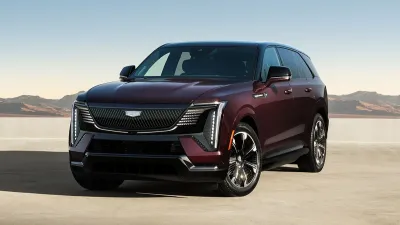
2026 Cadillac Escalade IQ EV Lands in the GCC — Prices, Specs, and Availability
Cadillac's flagship electric SUV, the 2026 Escalade IQ, arrives in GCC showrooms — starting at AED 586,000 in the UAE. Here's everything you need to know about range, specs, and regional availability.
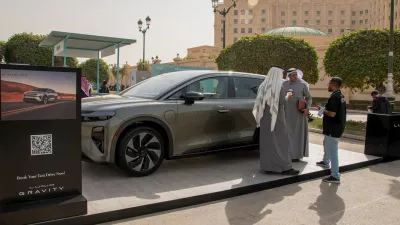
Lucid Starts Full EV Manufacturing in Saudi Arabia by End-2026
Lucid Motors confirms its KAEC plant will transition to full EV manufacturing by end-2026, ramping to 150,000 units/year by 2029 — a major milestone for Saudi Arabia's Vision 2030.

Tesla Cybertruck GCC Launch: Orders Open in UAE, Saudi Arabia, Qatar
Tesla Cybertruck officially launches in the GCC — UAE, Saudi Arabia, and Qatar now accepting orders. Saudi pricing starts at 435,000 SAR, with deliveries from March 2026. Here's everything we know.