
Breaking: Dubai Launches World's Largest Car Trade Hub - 22M Sq Ft Mega Project
Sheikh Maktoum bin Mohammed bin Rashid Al Maktoum has officially launched the Dubai Auto Market — a 22-million-square-foot mega project that will transform Dubai into the world's largest automotive trading hub. The groundbreaking initiative, announced on November 18, 2025, represents one of the most ambitious automotive infrastructure projects ever undertaken globally.
Directly following directives from His Highness Sheikh Mohammed bin Rashid Al Maktoum, the project positions Dubai at the epicenter of global automotive trade. With DP World appointed to lead development, the hub leverages Dubai's existing logistics supremacy and Jebel Ali Port's massive Ro-Ro capabilities.
Here's what you need to know about this game-changing development.

What Is the Dubai Auto Market Project?
The Dubai Auto Market spans an astonishing 22 million square feet — equivalent to approximately 308 football fields. This isn't just another car market; it's designed to be a comprehensive automotive ecosystem that will handle over 800,000 vehicles annually.
To put that number in perspective: that's more than the total new car sales of many mid-sized countries. The scale is genuinely unprecedented in automotive trading history.
The facility will feature more than 1,500 showrooms, cluster-based workshops, expansive warehouses, multi-storey parking structures, a dedicated auction house, a convention centre, hospitality outlets, retail spaces, and food and beverage options. It's essentially a city within a city dedicated entirely to automobiles.
Why This Matters for GCC Car Buyers
For consumers across the UAE, Saudi Arabia, Kuwait, Qatar, Oman, and Bahrain, this development could fundamentally change car buying economics. The massive scale and integrated logistics mean potentially lower prices, better availability, and unprecedented variety.
Think about it: when you consolidate global automotive trade through a single, ultra-efficient hub, economies of scale kick in dramatically. Shipping costs drop. Inventory turns faster. Competition intensifies among sellers.
The result? Better deals for you.
Dubai's strategic location already makes it a natural re-export hub for the entire Middle East, Africa, and South Asia. This mega-market will amplify that advantage exponentially. Whether you're looking for a brand-new luxury sedan, a practical family SUV, or a specialty vehicle, the Dubai Auto Market aims to be your one-stop destination.
Inside the 22-Million-Sq-Ft Automotive Ecosystem
Let's break down what makes this project so revolutionary. First, the 1,500+ showrooms will accommodate virtually every major global brand and countless specialized dealers. Want to compare a German luxury sedan with a Japanese hybrid and an American pickup truck? You'll be able to do it within walking distance.
The cluster-based workshop concept is particularly innovative. Instead of scattered service centers, specialized workshops will be organized by brand or service type. This creates efficiency through concentration — parts availability improves, technician expertise deepens, and service quality rises.
Then there's the auction house. For dealers and individual buyers alike, this means access to vehicle auctions on an industrial scale. Expect everything from nearly-new executive cars to commercial vehicles to specialty imports all available through transparent bidding processes.
The multi-storey parking isn't just for visitors — it's for inventory. With capacity for thousands of vehicles, storage and display logistics become seamless. No more wandering through dusty lots in the summer heat; climate-controlled indoor viewing becomes the standard.
Strategic Vision from Dubai's Leadership
Sheikh Maktoum bin Mohammed bin Rashid Al Maktoum emphasized the project's significance during the launch. "Under the vision and directives of His Highness Sheikh Mohammed bin Rashid Al Maktoum, Dubai continues to solidify its status as a global hub for trade and logistics," he stated.
"The Dubai Auto Market reflects this ambitious vision, creating a world-class ecosystem that will enhance the automotive trade sector and support Dubai's economic diversification goals."
Sultan Ahmed bin Sulayem, DP World Group Chairman & CEO, added: "Dubai Auto Market represents a significant milestone in reinforcing Dubai's position as a premier global trade and logistics hub. By leveraging DP World's extensive logistics network and expertise, we are confident this project will enhance regional trade and drive Dubai's ongoing economic growth."
The presence of key officials — including Mohamed bin Hadi Al Hussaini (Minister of State for Financial Affairs), Nasser Al Neyadi (CEO Ports, Customs and Free Zone Corp.), and Dr. Abdullah Busenad (Director General Dubai Customs) — underscores the project's governmental priority.
Logistics Powerhouse: Jebel Ali Port Connection
Here's where the strategic genius becomes clear. The Dubai Auto Market will integrate directly with Jebel Ali Port's Roll-on/Roll-off (Ro-Ro) facilities — already among the world's busiest for vehicle handling.
This creates a seamless pipeline from ship to showroom.
Vehicles arriving from manufacturing hubs in Japan, Korea, Europe, and America can be processed, prepared, and delivered to showrooms with minimal handling and maximum efficiency. For re-export markets across the GCC, Africa, and beyond, the supply chain shortens dramatically.
DP World's global logistics network adds another layer of advantage. With operations spanning six continents, the company can optimize shipping routes, consolidate loads, and streamline customs processes. The result? Faster delivery times and lower transportation costs that potentially translate to consumer savings.
Economic Impact and Job Creation
Beyond consumer benefits, the Dubai Auto Market represents a massive economic stimulus. The project will create thousands of jobs across retail, logistics, maintenance, hospitality, and administrative sectors.
Specialized automotive roles — from master technicians to parts specialists to sales professionals — will see particularly strong demand. The convention centre alone will generate recurring economic activity through automotive exhibitions, product launches, and industry conferences.
Light industrial facilities for vehicle assembly and customization add another dimension. Imagine regional assembly of certain models or bespoke customization services for the GCC's luxury market. The possibilities extend far beyond simple buying and selling.
For Dubai's economy, this reinforces diversification away from oil dependency while leveraging existing strengths in trade and logistics. It's a textbook example of strategic economic development.
What This Means for Regional Car Prices
Now for the million-dirham question: will car prices actually drop in the GCC? While no one can guarantee specific reductions, the structural advantages suggest positive pressure on pricing.
When you create the world's largest automotive trading hub, several economic forces align in consumers' favor:
- Increased competition — More dealers in one location means more price competition
- Reduced logistics costs — Efficient shipping and handling lower overhead
- Faster inventory turnover — Dealers can operate with smaller margins when they sell faster
- Auction transparency — Market prices become more visible and standardized
For popular models like the Toyota Land Cruiser, Nissan Patrol, or luxury European brands, consumers might see more aggressive pricing and better availability. For niche vehicles and specialty imports, access improves dramatically.
The scale also enables better after-sales support. With dedicated workshop clusters and extensive parts warehouses, maintenance costs could become more competitive too.
Timeline and Implementation: What's Next
While the official launch occurred in November 2025, construction and phased implementation will follow. DP World's appointment as development leader suggests efficient execution given their track record with Jebel Ali and other mega-projects.
Initial phases will likely focus on core infrastructure — showrooms, parking, and basic workshop facilities. Later phases will add the convention centre, hospitality components, and specialized light industrial areas.
The target of handling 800,000+ vehicles annually represents full operational capacity. Early phases will ramp up toward that number as facilities come online and trade flows redirect through the new hub.
For GCC consumers, the impact will likely be gradual but significant. As dealers begin operating from the new facility in 2026 and beyond, the benefits of scale and efficiency should start filtering through to showroom floors across the region.
Dubai's Automotive Future: A Global Hub Realized
The Dubai Auto Market represents more than just a big car market. It's a statement of intent — Dubai's ambition to dominate global automotive trade just as it dominates air travel, port operations, and international business.
For decades, Dubai has been the Middle East's automotive gateway. This project elevates that role to global supremacy. When you combine visionary leadership, strategic geography, world-class logistics, and unprecedented scale, you create something transformative.
As Sheikh Maktoum emphasized, this initiative reflects Dubai's ongoing commitment to economic diversification and global leadership in trade. The automotive sector — representing one of the world's largest industries — now has a new global capital.
The bottom line: Whether you're shopping for your next family car, sourcing fleet vehicles for your business, or simply fascinated by automotive innovation, the Dubai Auto Market will reshape your experience. The era of Dubai as the world's automotive trading hub has officially begun.
Related Articles
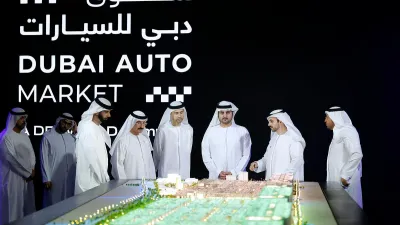
Breaking: Dubai Launches World's Largest Auto Market — 22M Sq Ft Hub with 1,500 Showrooms
Dubai officially launches the Dubai Auto Market, a massive 22-million sq ft automotive hub with 1,500 showrooms aiming to handle 800,000 vehicles annually.
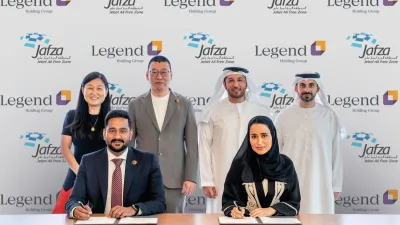
Legend Holding Group Announces AED 500M Jafza Automotive Hub Expansion
Dubai's Legend Holding Group reveals AED 500 million investment for 1 million sq ft automotive hub in Jafza, set to revolutionize GCC vehicle distribution.
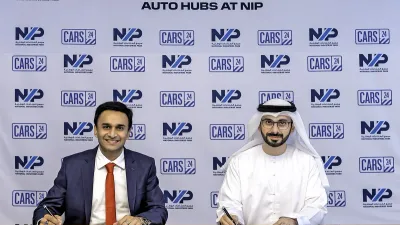
DP World and Cars24 Launch AED 55 Million Automotive Refurbishment Hub in Dubai
DP World and Cars24 partner on a massive 220,000 sq ft solar-powered facility in Dubai's NIP to process 100,000+ vehicles annually. Launching August 2026.