
2026 Nissan Navara Review: Triton-Based Pickup Tuned for GCC Buyers
The pickup truck wars in the GCC are about to get serious. For over a decade, the Toyota Hilux has dominated desert roads and city streets across the UAE, Saudi Arabia, and beyond. But Nissan is striking back with its most significant update in generations. The 2026 Nissan Navara isn't just a facelift—it's a completely new vehicle built on the Mitsubishi Triton platform, featuring Australian-tuned suspension specifically designed for tough conditions. Starting around AED 93,000 in the UAE, this all-new pickup promises to challenge the establishment. Here's everything you need to know.

2026 Nissan Navara Overview: A Complete Reinvention
After more than 10 years with the D23 generation, Nissan has finally delivered a clean-sheet redesign. The 2026 Nissan Navara (codenamed D27) represents one of the most significant collaborations in the automotive world—it shares its platform with the Mitsubishi Triton, thanks to the Nissan-Mitsubishi alliance. But don't mistake it for a simple rebadge. Nissan has put its own stamp on everything from styling to suspension tuning, with Australian engineering firm Premcar handling the damping setup for improved ride quality.
This is a proper workhorse designed for GCC conditions. Whether you're navigating Dubai's summer traffic, tackling Saudi desert dunes, or hauling equipment on a Kuwaiti construction site, the new Navara has been engineered to handle it all. The switch to traditional leaf-spring rear suspension (from the previous coil setup) might sound like a step backward, but it actually improves payload capacity and durability—critical factors for regional buyers who use their pickups for both work and play.
2026 Nissan Navara Exterior Design: Bold and Assertive
First impressions matter, and the 2026 Nissan Navara makes a strong one. It's noticeably larger than its predecessor, with more assertive styling that distinguishes it from its Triton cousin. The front end features Nissan's latest design language with a prominent V-motion grille, flanked by sharp LED headlights on higher trims. The overall look is muscular without being overly aggressive—a balance that should appeal to both commercial and lifestyle buyers.
From the side, you'll notice the longer wheelbase and improved proportions. The wheel arches are more pronounced, giving it a planted stance that suggests capability. At the rear, redesigned taillights and a more sculpted tailgate complete the transformation. Ground clearance remains generous at approximately 215mm, ensuring you won't scrape over speed bumps in Abu Dhabi or get stuck in soft Saudi sand.
But here's the thing: while it shares its basic architecture with the [Mitsubishi Triton], Nissan has done enough visually to make the Navara stand on its own. The differences are subtle but significant—kind of like how the 2026 Nissan Pathfinder shares some DNA with its platform mates but delivers a distinct personality.
2026 Nissan Navara Interior & Comfort: Work-Ready with Lifestyle Touches
Step inside, and you'll find the biggest generational leap. The previous Navara's dated cabin has been replaced with a modern, functional interior that balances work truck practicality with family vehicle comfort. Materials quality has taken a substantial jump forward, with soft-touch surfaces in key areas and durable plastics where they matter most.
The seats deserve special mention. In the range-topping ST-X trim, you get leather upholstery with heating function—a welcome feature during cooler GCC winters. Front occupants enjoy ample adjustment, while rear passengers benefit from the increased wheelbase with more legroom than before. The dual-zone climate control system will be particularly appreciated during UAE summers, allowing driver and passenger to set their preferred temperatures independently.
Cargo space in the tub remains competitive, though exact dimensions haven't been finalized for GCC specifications. What we do know is that the switch to leaf springs has increased payload capacity compared to the outgoing model. For those who need to haul equipment or supplies, this is a tangible improvement. The cabin storage is well thought out too, with multiple cupholders, door pockets, and a center console that can swallow larger items.
Compared to Nissan's SUV lineup like the 2026 Nissan X-Trail, the Navara's interior leans more toward durability than luxury. But that's exactly what pickup buyers want—an interior that can withstand job site abuse while still being comfortable enough for daily commuting.
2026 Nissan Navara Performance & Driving: The Heart of the Matter
This is where the 2026 Nissan Navara makes its case most convincingly. Under the hood lies a 2.4-liter twin-turbo diesel four-cylinder engine that produces 150kW (201 horsepower) at 3,500rpm and a substantial 470Nm of torque between 1,500-3,500rpm. That's a significant upgrade over the previous 2.5-liter unit, both in power and especially torque—the lifeblood of any diesel pickup.
The transmission is a six-speed automatic across all variants, a sensible choice for GCC traffic conditions where manuals can become tiresome. Nissan claims a 0-100km/h time of approximately 10.5 seconds, which is respectable for a vehicle of this size and type. More importantly, the torque curve is perfectly suited to regional driving—whether you're towing a boat in Oman or climbing a gravel road in Ras Al Khaimah.
Fuel economy is quoted at 7.7L/100km combined, though real-world figures in GCC conditions (with summer air conditioning running constantly) will likely be higher. Still, this represents an improvement over previous models and should help keep running costs manageable.
But the real story is how it drives. The Premcar-tuned suspension delivers what Australian reviewers have called a "compliant ride" and "dynamic refinement near the top of the four-cylinder segment." That's promising news for GCC buyers who face everything from perfectly paved highways to rough desert tracks. The steering has been described as well-weighted, and overall handling is reportedly more composed than the Triton it's based on—proof that Nissan's engineering input extends beyond just badges.
2026 Nissan Navara 4WD Systems: Built for Desert Adventures
GCC buyers care deeply about off-road capability, and Nissan has delivered two distinct four-wheel-drive systems. Entry-level SL and ST models get a traditional part-time 4x4 setup with high and low ranges—perfect for those who only need four-wheel drive occasionally.
The ST-X and Pro-4X variants, however, feature a more sophisticated full-time Super 4WD system with a Torsen center differential. This allows for secure all-surface traction without the binding issues that can occur with part-time systems on paved roads. Both systems include a rear differential lock for extreme situations, and low-range gearing for serious off-roading.
Towing capacity remains best-in-class at 3,500kg braked and 750kg unbraked. Whether you're pulling construction equipment or a weekend toy, the Navara has you covered. The improved Gross Combination Weight Rating (GCWR) means you can carry more while towing—an important consideration for commercial users.
Compared to legendary off-roaders like the 2026 Nissan Patrol, the Navara offers a different kind of capability. It's more utilitarian, more focused on payload and towing, but still thoroughly capable of handling the desert excursions that GCC buyers love.
2026 Nissan Navara Technology & Safety: Modern but Not Cutting-Edge
Technology is one area where the Navara plays it safe rather than revolutionary. The infotainment system features a 9-inch touchscreen on higher trims, with wireless Apple CarPlay and wired Android Auto. That wired Android connection has drawn some criticism, but it's a minor quibble for most users.
The digital instrument cluster varies by trim level, with higher-spec models getting more comprehensive displays. Other available features include keyless entry and start, wireless phone charging, and a premium audio system. It's not as tech-forward as some rivals, but it covers the essentials well.
Where the Navara truly shines is safety. It's earned a 5-star ANCAP rating, with standard equipment including eight airbags, autonomous emergency braking (AEB), lane keep assist, lane departure warning, blind-spot monitoring, rear cross-traffic alert, and a 360-degree camera system. For GCC buyers who use their vehicles for family transport as well as work, this comprehensive safety suite is reassuring.
The safety technology puts it on par with Nissan's latest passenger vehicles like the 2026 Nissan Altima, demonstrating that pickup trucks no longer lag behind in this critical area.
2026 Nissan Navara Pricing & Value in the GCC
Now for the crucial question: what will it cost you? While official GCC pricing hasn't been announced at time of writing, we can make educated estimates based on current models and Australian pricing.
In the UAE, expect the 2026 Nissan Navara to start between AED 93,000 and AED 106,000 for base models. The range-topping SE 4x4 variant should land around AED 101,850 (ex-factory). In Saudi Arabia, pricing may start from approximately SAR 44,900 for the ASF 4x2 manual transmission model—though most GCC buyers will likely opt for automatic transmissions.
Let's break down the likely trim structure for our region:
Base Work Ute (SL equivalent): Expect steel wheels, basic infotainment, vinyl seats, and part-time 4WD. This is your pure workhorse for construction or farming.
Mid-Spec (ST equivalent): Adds alloy wheels, better infotainment, additional comfort features, and improved safety systems. The sweet spot for many buyers.
High-Spec (ST-X equivalent): Leather seats, heated front seats, dual-zone climate control, 18-inch alloys, premium audio, and full-time Super 4WD. This is the lifestyle choice.
Off-Road Focused (Pro-4X equivalent): All-terrain tires, additional underbody protection, unique styling elements, and all the ST-X equipment. For the serious adventurer.
How does this stack up against the competition? The Toyota Hilux starts around AED 100,000+ in the UAE and enjoys legendary resale value. The Ford Ranger commands a premium at AED 120,000+ but offers more sophisticated technology. The Mitsubishi Triton—the Navara's platform twin—will likely undercut it on price, making value perception crucial.
Here's the bottom line: the Navara needs to position itself as the smart choice between the expensive Ranger and the ubiquitous Hilux. Its Australian tuning should resonate with GCC buyers who face similar climate and terrain challenges, while the comprehensive safety package addresses growing regional awareness of vehicle safety.
2026 Nissan Navara vs The Competition
Let's get specific about how the new Navara compares to its rivals in GCC-relevant terms:
vs Toyota Hilux: The Hilux has near-unbreakable reliability and unmatched resale value. The Navara counters with more modern safety features, potentially better ride quality (thanks to Premcar tuning), and more assertive styling. The powertrain is competitive, with the Navara's 470Nm of torque matching or exceeding most Hilux variants.
vs Ford Ranger: The Ranger offers more sophisticated technology, a more car-like interior, and higher trim luxury. However, it's significantly more expensive. The Navara provides 90% of the capability at 80% of the price, with potentially better durability for harsh commercial use.
vs Mitsubishi Triton: This is the tricky comparison. The Triton shares the same platform, engine, and basic mechanicals. The Navara differentiates itself with Nissan-specific styling, Premcar suspension tuning, and potentially better standard equipment. It'll come down to pricing and brand preference.
vs Isuzu D-Max: The D-Max is known for bulletproof diesel engines and straightforward engineering. The Navara offers more refinement, better safety technology, and a more modern overall package.
For buyers also considering SUVs, the Navara offers something that even capable vehicles like the 2026 Nissan Xterra can't match: genuine payload capacity and that open cargo bed that's so useful in the region.
Who Should Buy the 2026 Nissan Navara?
The 2026 Nissan Navara makes the most sense for three types of GCC buyers:
1. Commercial Users: Tradespeople, farmers, and businesses that need a reliable workhorse with strong payload and towing capabilities. The improved durability from leaf-spring suspension and the powerful diesel engine make it ideal for demanding work.
2. Lifestyle Buyers: Weekend adventurers who want a vehicle that can handle desert camping, beach trips, and mountain roads while still being comfortable for daily school runs and supermarket trips. The ST-X and Pro-4X trims are perfect here.
3. Hilux Considerers: Anyone looking at a Toyota Hilux should test drive the Navara. You might get more features for your money, better safety technology, and a more comfortable ride without sacrificing capability.
It's less ideal for those who prioritize cutting-edge technology or want the most luxurious interior in the segment. For them, the Ford Ranger or even stepping up to a 2026 Nissan Patrol PRO-4X might make more sense.
Potential Concerns for GCC Buyers
No vehicle is perfect, and the Navara has some question marks that regional buyers should consider:
1. Brand Perception: Nissan doesn't have the same pickup truck pedigree as Toyota in the GCC. Resale values may not match the Hilux's legendary retention.
2. First-Generation Issues: This is an all-new platform sharing components with the Triton. While that spreads development costs, it also means any teething problems will affect both vehicles.
3. Heat Management: How will the 2.4-liter twin-turbo diesel handle sustained high temperatures during UAE summers? The previous Navara had a solid reputation, but new engines always carry some uncertainty.
4. Dealer Support: Nissan's dealer network is comprehensive, but parts availability for the new model may take time to establish fully.
These aren't necessarily deal-breakers, but they're worth factoring into your decision. The good news? Nissan typically offers strong warranties in the GCC region, which should provide peace of mind.
The Final Verdict: Is the 2026 Nissan Navara Worth Your Money?
After examining every aspect of Nissan's game-changing pickup, here's our honest assessment:
The 2026 Nissan Navara represents the most compelling alternative to the Toyota Hilux we've seen in years. It combines modern safety technology, proven mechanicals (thanks to the Triton platform), and specific suspension tuning for tough conditions. The 2.4-liter twin-turbo diesel delivers strong performance, while the available full-time 4WD system should handle anything GCC terrain can throw at it.
Yes, it's very similar to the cheaper Mitsubishi Triton. Yes, the technology isn't class-leading. And yes, it faces an uphill battle against the Hilux's formidable reputation. But for buyers who value safety, ride comfort, and distinctive styling, the Navara makes a strong case for itself.
TL;DR verdict: The 2026 Nissan Navara is a significant improvement over its predecessor and a genuine contender in the GCC pickup market. It won't dethrone the Hilux overnight, but it offers enough differentiation—particularly in safety and ride quality—to deserve your serious consideration. Test drive it against the competition before making your decision.
For current Nissan owners considering an upgrade from models like the 2022 Nissan Navara, this new generation represents a quantum leap forward. And for those looking at the broader Nissan lineup, from the practical 2026 Nissan Kicks to the legendary 2024 Nissan Patrol Safari, the Navara fills the crucial pickup truck slot with newfound competence.
The pickup truck segment in the GCC just got more interesting. Whether you're a contractor in Dubai, an adventurer in Saudi Arabia, or a family buyer in Qatar, the 2026 Nissan Navara deserves a spot on your shortlist.
Frequently Asked Questions
Related Articles
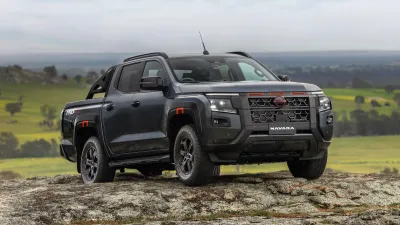
2026 Nissan Navara Review: The Ultimate Triton-Based Pickup for GCC?
We review the all-new 2026 Nissan Navara D27 generation. Is this Triton-based pickup with Australian tuning the perfect desert companion for GCC buyers? Find out.
2026 Chevrolet Silverado 1500 Review: Capable Full-Size Pickup for GCC Buyers
Our in-depth 2026 Chevrolet Silverado 1500 review reveals why this American pickup dominates GCC roads. See specs, UAE prices from AED 106,800, and how it beats the competition.
2026 Nissan Z Review: Twin-Turbo V6 Thrills Meet GCC Road Reality
The 2026 Nissan Z brings 400hp twin-turbo V6 power to GCC roads. Discover if this Japanese sports car legend delivers the ultimate driving thrill.