
2026 Hyundai Tucson Review: Bold Design Meets Smart GCC Value
This article is about the
Hyundai Hyundai Tucson 2026The compact SUV segment in the GCC is fiercely competitive, but the 2026 Hyundai Tucson stands out with styling that borders on concept-car wild — and substance to back it up. It's the kind of family SUV that makes you turn your head after you park it.
Here's the thing: the Tucson has been a strong seller in the UAE and Saudi Arabia for years, and the 2026 model carries forward the fourth-generation's striking design with a few key updates. With a starting price of AED 104,500 for the base trim in the UAE, it undercuts rivals like the 2026 Honda CR-V (AED 129,900) while offering generous equipment and class-leading safety.
But does the 2026 Tucson deliver where it counts? Let's dive deep into the design, performance, tech, and value proposition for GCC buyers.

2026 Hyundai Tucson Overview: What's New and Who It's For
The 2026 Hyundai Tucson is a compact SUV that slots between the smaller 2026 Hyundai Kona and the larger 2026 Hyundai Santa Fe in Hyundai's SUV lineup. It remains on the same generation launched in 2021, with no major facelift for 2026 — but that's fine, because the design was already ahead of its time.
Who is the Tucson for? Families in the UAE, Saudi Arabia, Qatar, Kuwait, Oman, and Bahrain who need a practical daily driver with generous rear legroom, a big boot, and the peace of mind that comes with top safety ratings. It's also ideal for first-time SUV buyers moving up from a sedan, thanks to its approachable price and easy driving character.
The Tucson is built in the Czech Republic for global markets, including GCC specs. Hyundai offers it with two petrol powertrains in the region: a 2.0-litre naturally aspirated four-cylinder (154 hp / 192 Nm) and a 1.6-litre turbocharged four-cylinder (higher output) with all-wheel drive on the range-topping Premium trim.
2026 Hyundai Tucson Exterior Design: Head-Turner or Divisive?
Love it or hate it, the 2026 Hyundai Tucson is impossible to ignore. The front end is dominated by Hyundai's parametric grille, which integrates hidden LED daytime running lights (DRLs) that only illuminate when switched on. It's a party trick that still feels fresh years after launch.
The side profile is sharp and creased, with dramatic lines that catch the desert sun. At the rear, the full-width light bar gives it a wide, planted stance. The squared-off wheel arches hint at capability, while the roofline slopes just enough to suggest movement without compromising headroom.
Key dimensions (approximate GCC specs):
- Length: ~4,630 mm
- Width: ~1,865 mm
- Height: ~1,665 mm
- Wheelbase: ~2,755 mm
The Tucson's styling is more adventurous than the conservative 2026 Kia Sportage (its corporate cousin) and certainly more dramatic than the sensible 2026 Honda CR-V. If you want your family SUV to get noticed, the Tucson delivers.
2026 Hyundai Tucson Interior & Comfort: Spacious Cabin with Premium Touches
Step inside, and the drama continues. The 2026 Hyundai Tucson cabin features a sweeping dashboard with a dual 12.3-inch screen layout (on higher trims) — one for the digital instrument cluster, one for the infotainment system. The design is clean, modern, and unusually airy for a compact SUV.
Material quality is impressive for the price point. Soft-touch plastics and leather upholstery (on Premium trims) elevate the experience, while the physical climate controls are a welcome relief in an era of touch-everything interiors. GCC buyers will appreciate the ventilated front seats available on higher trims — essential for those 50°C summer days.
Space is a standout. The rear seats offer generous legroom even for tall passengers, and the flat floor (on FWD versions) means three across the back is realistic. The boot measures around 620 litres, which swallows prams, golf bags, or a big Costco run with ease.
Rear air conditioning vents are standard, and higher trims add rear sunshades and USB-C ports. The panoramic sunroof on Premium trims floods the cabin with light — though you'll want to close that shade during peak summer months.
2026 Hyundai Tucson Performance & Driving: Adequate for City Life
Here's where the 2026 Hyundai Tucson shows its sensible side. The base 2.0-litre naturally aspirated engine produces 154 horsepower and 192 Nm of torque, paired with a 6-speed automatic transmission. It drives the front wheels in standard form, with all-wheel drive reserved for the 1.6T Premium trim.
Let's be honest about performance: 0-100 km/h takes 11.4 seconds. That's not quick. The Tucson is adequate for city driving and highway cruising, but you'll need to plan overtakes with patience. The 6-speed auto is smooth but not particularly eager, and the engine gets a bit vocal when pushed.
But that's not the whole story. The ride quality is where the Tucson shines. Hyundai has tuned the suspension for refined comfort — bumps and potholes are absorbed well, and the steering is light and easy for parking. On the highway, it tracks straight and feels stable, making it a capable road-tripper across the UAE or Saudi Arabia.
Fuel economy is 11.4 to 13.7 km/L depending on driving conditions. That's average for the segment — the 2026 Kia Sportage does slightly better at 14.3 km/L, while the Honda CR-V matches the Tucson's figures. In stop-start city traffic (Dubai's Sheikh Zayed Road or Riyadh's ring roads), expect closer to 11 km/L.
The 1.6T Premium 4WD version is noticeably punchier, though exact power figures for GCC weren't confirmed in our research. It's the one to pick if you regularly carry a full load or want the extra traction for light off-road adventures in the dunes.
2026 Hyundai Tucson Technology & Safety: Loaded with Kit
Hyundai has loaded the 2026 Tucson with technology that rivals more expensive competitors. The 12.3-inch touchscreen runs Hyundai's latest software with wireless Apple CarPlay and Android Auto, Bluetooth, and a crisp reversing camera. The optional Bose premium sound system is worth the upgrade.
Safety is a strong suit. The Tucson scores a perfect 5 stars from both NHTSA and Euro NCAP. Standard safety features across all trims include:
- Forward collision warning with auto emergency braking
- Lane departure warning with lane keep assist
- Blind-spot monitoring (higher trims)
- Rear cross-traffic alert
- Adaptive cruise control with stop-and-go (Premium trims)
- 360-degree surround-view camera (Premium trims)
These features aren't just nice to have — they're genuinely useful in GCC conditions. The blind-spot monitoring is a godsend on highways where lane discipline can be... creative. And the adaptive cruise control makes the long drive from Dubai to Abu Dhabi or Jeddah to Mecca far less tiring.
Hyundai's SmartSense suite of driver aids is among the best in the segment for usability. The lane keep assist isn't overly aggressive, and the adaptive cruise maintains smooth distances even in stop-and-go traffic.
2026 Hyundai Tucson Pricing & Value in the GCC
This is where the 2026 Hyundai Tucson makes its strongest case. In the UAE, pricing breaks down as follows:
| Trim | Price Range (AED) | Drivetrain |
|---|---|---|
| 2.0 L4 FWD Smart | 104,500 - 113,300 | FWD |
| 2.0 I4 FWD Comfort | 106,800 - 116,000 | FWD |
| 2.0 I4 FWD Premium | 108,400 - 119,200 | FWD |
| 1.6TC I4 4WD Premium | 125,000 - 136,700 | 4WD |
In Saudi Arabia, the 2026 Tucson starts at approximately SAR 103,385 (around AED 100,000), making it similarly competitive.
The base Smart trim is well-equipped enough for most buyers, but the Comfort trim is the sweet spot — adding key features without a big price jump. The Premium trims add the bigger screens, leather, and sunroof, while the 1.6T 4WD Premium is the choice for those wanting maximum capability.
How does it compare to rivals?
- The 2026 Kia Sportage starts at AED 102,900 — slightly cheaper, with a 197 hp turbocharged engine and a more conventional design. The Tucson counters with more striking looks and a more premium-feeling interior.
- The 2026 Honda CR-V starts at AED 129,900 — significantly more expensive, with stronger resale value and a more refined driving experience.
- The 2026 Toyota RAV4 is expected around AED 120,000+, with hybrid options available but at a higher price point.
Hyundai's 5-year/unlimited km warranty in the UAE adds peace of mind, and the Tucson's 4.0/5 resale rating (per DrivenArabia data) is respectable for the segment. Reliability scores a perfect 5.0/5 with no known problems reported — a big deal for buyers planning to keep their car long-term.
2026 Hyundai Tucson Verdict: Should You Buy One?
The 2026 Hyundai Tucson is a compelling choice in the GCC's compact SUV segment. It offers design that stands out, a spacious and well-built interior, a generous features list, and excellent safety ratings — all at a price that undercuts key rivals.
The trade-offs? The base 2.0L engine is slow (11.4 seconds 0-100 km/h), fuel economy is average, and the driving experience prioritises comfort over fun. If you want sporty handling, the Mazda CX-5 is better. If you want the best resale value, the Honda CR-V or Toyota RAV4 might edge ahead.
But for the majority of GCC families who want a stylish, safe, practical, and affordable compact SUV, the 2026 Hyundai Tucson hits the sweet spot.
Verdict: The 2026 Hyundai Tucson proves that a family SUV doesn't have to be boring. It's spacious, safe, and loaded with tech — all at a price that undercuts the Honda CR-V and Toyota RAV4. The base engine is slow, but the refinement and value are hard to beat. Highly recommended for GCC families.
Check current prices and availability at your local dealer, or browse the 2026 Hyundai Tucson listing on DrivenArabia for the latest deals in the UAE.
If the Tucson doesn't fit your needs, explore the related 2026 Hyundai Santa Fe for a larger three-row option, or the 2026 Hyundai Kona for a more budget-friendly compact crossover.
Frequently Asked Questions
Related Articles
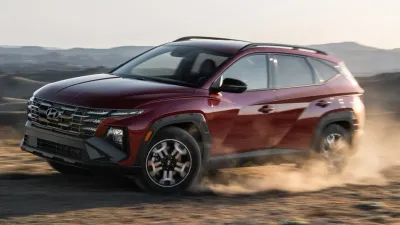
2026 Hyundai Tucson Review: The Ultimate Value SUV for GCC Families
Our 2026 Hyundai Tucson review reveals why this compact SUV offers unbeatable value, safety, and comfort for GCC families. See UAE prices, specs & verdict.
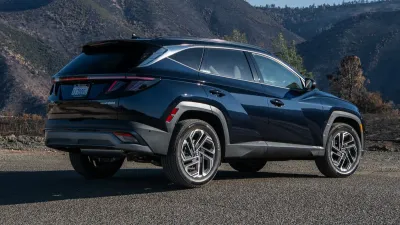
2026 Hyundai Tucson Review: The Smartest Compact SUV for GCC Families
Discover why the 2026 Hyundai Tucson is the top choice for GCC families. With bold styling, spacious interior, and advanced safety, it offers unbeatable value in the competitive compact SUV segment.
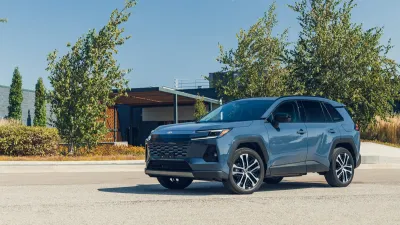
2026 Toyota RAV4 Review — Hybrid-Only Redesign Changes Everything
The 2026 Toyota RAV4 drops non-hybrid engines globally and adds three distinct grade families. We break down pricing, specs, and whether it's still the GCC's compact SUV king.