
2026 Hyundai Ioniq 5 Review: The EV That Changed the Game
This article is about the
Hyundai Hyundai Ioniq 5 2026The 2026 Hyundai Ioniq 5 didn't just enter the electric SUV conversation — it rewrote the rules. With its pixelated retro-futuristic design, 800-volt ultra-rapid charging, and a cabin that feels a class above its price, this is the EV that made legacy automakers sit up and take notice. And for 2026, Hyundai has sharpened the pencil with price cuts, new colors, and hardware updates that make ownership easier than ever.
If you're shopping for an electric SUV in the GCC, the 2026 Hyundai Ioniq 5 deserves to be at the very top of your shortlist. Here's why — and where it falls short.

2026 Hyundai Ioniq 5 Overview
The Ioniq 5 rides on Hyundai's E-GMP dedicated electric platform, which means it isn't a converted gas car — it was born electric. That translates to a flat floor, a long wheelbase, and packaging efficiency that gas-based rivals simply can't match. It's classified as a compact SUV, but the interior space punches well above its weight.
For 2026, the big news is value. Hyundai slashed prices by up to $9,800 in the US market, and that aggressive pricing has filtered through to the GCC. The Ioniq 5 now starts at approximately AED 152,000 in the UAE for the SE RWD 58 kWh trim, making it more accessible than ever. In Saudi Arabia, pricing kicks off at around SAR 217,350.
You also get new exterior colors like Sage Silver Matte, a reinforced body structure for improved rigidity, heated rear seats on higher trims, and an included Level 1/2 charging cable — a welcome addition that saves you from buying a home charger separately.
Key specs at a glance:
- Powertrain: Electric, RWD standard (AWD available)
- Horsepower: 168–225 hp (RWD) / up to 320 hp (AWD)
- Torque: 350 Nm (RWD) / up to 605 Nm (AWD)
- Battery: 58 kWh or 84 kWh
- Range: 245–318 miles (EPA)
- 0–100 km/h: 7.3 seconds (RWD) / ~5.2 seconds (AWD)
- Charging: 10–80% in ~18 minutes on 350 kW DC
- Safety: Euro NCAP 5 stars
2026 Hyundai Ioniq 5 Exterior Design
Let's be honest — you don't buy the Ioniq 5 to blend in. Its pixelated lighting signatures, clamshell hood, and clean slab sides draw inspiration from the Hyundai Pony concept of the 1970s, but the execution is thoroughly modern. It looks like nothing else on the road, and in a region where SUVs all seem to share the same silhouette, that matters.
The 2026 model adds new color options including the striking Sage Silver Matte, which shifts tone depending on the desert sun — a fitting choice for GCC buyers. The reinforced body structure for 2026 doesn't change the look, but it does improve torsional rigidity, which pays dividends in ride quality and crash safety.
Dimensions:
- Length: ~4,655 mm (183.3 in)
- Wheelbase: 3,000 mm — longer than many midsize SUVs
- Curb weight: 1,830–2,370 kg depending on trim and battery
That long wheelbase and short overhangs are pure E-GMP advantage. The wheels are pushed to the corners, giving the Ioniq 5 a planted, confident stance. And those 20-inch alloys on upper trims fill the arches beautifully.
But here's the thing — for all its visual drama, the Ioniq 5 is surprisingly practical. The flat sides and upright greenhouse mean excellent visibility, and the door openings are wide, making it easy to get in and out even with bulky gear.
2026 Hyundai Ioniq 5 Interior & Comfort
Step inside and the Ioniq 5 immediately feels more expensive than its price suggests. The cabin is minimalist without being sparse, and the materials — from the eco-processed leather to the recycled fabric trim — are genuinely premium. This isn't the hard-plastic interior you might expect at this price point.
The headline feature is the Living Space concept. The flat floor and sliding center console create an open, lounge-like feel. The front seats even have a relaxation mode that reclines nearly flat — perfect for waiting at a charging station or taking a break during a long drive across the Emirates.
Interior highlights:
- Dual 12.3-inch screens — one for instrumentation, one for infotainment
- Sliding center console with hidden storage
- Eco-processed leather seats with ventilation on higher trims
- Heated rear seats (newly standard on 2026 upper trims)
- Vehicle-to-Load (V2L) — power your devices, camp gear, even another EV
Cargo space is generous too. You get roughly 527 liters behind the rear seats, expanding to over 1,587 liters with the rear seats folded. There's also a small frunk (front trunk), though it's admittedly tiny — one of the most common complaints from reviewers. Don't expect to fit much more than a charging cable in there.
Rear-seat passengers are the real winners. Thanks to that 3,000 mm wheelbase and flat floor, legroom is exceptional. Three adults can sit side by side without the foot-well intrusion you'd get in a transmission-tunnel car. If you frequently carry family or colleagues, the Ioniq 5 delivers midsize-SUV space in a compact footprint.
And the best part? The cabin is impressively quiet. Wind and road noise are well suppressed, making highway cruising between Abu Dhabi and Dubai a serene experience. The 2026 body reinforcement further reduces NVH (noise, vibration, and harshness), and it shows.
2026 Hyundai Ioniq 5 Performance & Driving
The Ioniq 5 isn't a sports car, but it's genuinely enjoyable to drive. The base RWD model with the 58 kWh battery produces 225 hp and 350 Nm of torque, which is more than enough for confident merging and overtaking on Sheikh Zayed Road. The 0–100 km/h sprint takes 7.3 seconds — brisk but not neck-snapping.
Step up to the AWD variant and things get serious. With 320 hp and up to 605 Nm on tap, the dual-motor setup drops the 0–100 km/h time to approximately 5.2 seconds. That's genuinely quick, and the instant torque delivery from both axles makes it feel even faster in real-world driving.
How does it compare to rivals? The Ioniq 5's AWD output of 320 hp compares favorably to the 2026 Hyundai Kona Electric's lower output, and it matches or beats most competitors in this price bracket. Against the Kia EV6 — its platform sibling — the Ioniq 5 trades a bit of sportiness for comfort.
And that's the key distinction. The Ioniq 5 prioritizes ride comfort over sharp handling. The suspension absorbs most bumps with composure, and the low center of gravity from the floor-mounted battery keeps body roll in check. However, on broken pavement and sharp expansion joints — which are common on some older GCC roads — the ride can feel jittery, especially on the larger 20-inch wheels. The 19s are the sweet spot for comfort.
The steering is another weak point. It's accurate and well-weighted, but there's very little feedback through the wheel. Enthusiast drivers will find it too light and disconnected, particularly in Normal mode. Sport mode adds weight but not much in the way of communication. If driving engagement is your top priority, the Kia EV6 or a Tesla Model Y will serve you better.
Range and efficiency in GCC conditions:
- 58 kWh RWD: ~245 miles (EPA) — expect less in UAE summer with AC at full blast
- 84 kWh RWD: ~318 miles (EPA) — the range champion of the lineup
- 84 kWh AWD: ~270 miles (EPA) — performance comes at a range cost
Here's the reality check: in 45°C+ UAE summer heat with the air conditioning working overtime, real-world range will drop by 15–25% compared to EPA figures. That's not unique to the Ioniq 5 — it's physics — but it's worth planning for. The 84 kWh RWD is the smart pick for GCC buyers who want maximum range.
2026 Hyundai Ioniq 5 Charging — The Real Superpower
This is where the Ioniq 5 absolutely destroys the competition. Its 800-volt architecture enables charging at up to 350 kW on compatible DC fast chargers — a capability typically reserved for ultra-luxury EVs like the Porsche Taycan.
Charging performance:
- 10–80% in approximately 18 minutes on a 350 kW charger
- 5–80% in about 20 minutes under optimal conditions
- Included Level 1/2 charging cable — a new addition for 2026
- CCS2 charging port — the standard connector for DEWA, ADNOC, and all GCC fast chargers
Let that sink in. You can add hundreds of kilometers of range in the time it takes to grab a coffee. In the GCC, where DC fast charging infrastructure is expanding rapidly across the UAE and Saudi Arabia, this is a game-changer. No other EV at this price point charges this fast.
Note that while the 2026 Ioniq 5 switches to the NACS port in North America, GCC-market cars continue to use the CCS2 connector — which is exactly what you want, since DEWA, ADNOC, and all major charging networks across the Emirates and Saudi Arabia use CCS2. No adapters needed.
The Kia EV6 shares the same 800V architecture and matching charge speeds, but most rivals — including the VW ID.4 and Ford Mustang Mach-E — are stuck on 400V systems that charge significantly slower. If fast charging matters to you (and it should), the Ioniq 5 is in a class of one at this price.
The Vehicle-to-Load feature deserves a mention too. It essentially turns the Ioniq 5 into a giant power bank. You can plug in laptops, camping equipment, or even run household appliances through the exterior port. For desert camping trips outside Dubai, this is genuinely useful.
2026 Hyundai Ioniq 5 Technology & Safety
Hyundai has packed the Ioniq 5 with tech that feels forward-looking without being overwhelming. The dual 12.3-inch screens dominate the dashboard, and the interface is responsive and logically laid out — a refreshing change from some overcomplicated systems.
Tech features:
- 12.3-inch digital instrument cluster with customizable views
- 12.3-inch touchscreen infotainment with wireless Apple CarPlay and Android Auto
- Head-up display with augmented reality navigation (higher trims)
- Bose premium audio system (8 speakers standard, upgraded on upper trims)
- Over-the-air (OTA) updates for system improvements
- Digital key — use your phone to unlock and start the car
Wireless smartphone integration is standard, and the system supports both Apple CarPlay and Android Auto without needing to plug in — a small but deeply appreciated detail. The augmented reality head-up display on upper trims projects navigation directions directly onto the windshield, which is especially helpful at complex highway interchanges.
On the safety front, the Ioniq 5 earned a 5-star Euro NCAP rating, and it comes loaded with driver-assistance features:
- Highway Driving Assist 2 — semi-autonomous lane-centering and adaptive cruise
- Forward Collision-Avoidance Assist with pedestrian and cyclist detection
- Blind-Spot Collision-Avoidance Assist
- Rear Cross-Traffic Collision-Avoidance Assist
- Safe Exit Warning — alerts passengers before opening doors into traffic
- Intelligent Speed Limit Assist
The 2026 model's reinforced body structure further improves crash performance. In a region where highway speeds are high and lane discipline can be unpredictable, these safety systems provide genuine peace of mind.
2026 Hyundai Ioniq 5 Pricing & Value in the GCC
Pricing is where the 2026 Ioniq 5 becomes truly compelling. Hyundai's aggressive pricing strategy — including significant cuts for 2026 — makes this one of the best value EVs in the GCC market.
UAE pricing breakdown:
| Trim | Price (AED) |
|---|---|
| SE RWD 58 kWh | ~AED 152,000–153,000 |
| Higher trims (Limited/XRT/N) | up to ~AED 216,000 |
Saudi Arabia pricing: EV variants start at approximately SAR 217,350.
At AED 152,000, the base Ioniq 5 undercuts most electric SUV rivals while offering superior charging speed and a more distinctive design. The sweet spot for most GCC buyers will be the 84 kWh RWD — it maximizes range (critical in our hot climate) without the price premium of the AWD system.
How does it compare to rivals on price?
- Kia EV6: Similar platform, similar pricing, slightly sportier feel — but the Ioniq 5 offers more cabin space
- Tesla Model Y: Starting around AED 165,000+ in the UAE, the Model Y has the Supercharger network advantage but can't match the Ioniq 5's charging speed on third-party 350 kW stations
- VW ID.4: Generally more expensive and significantly slower to charge
- Ford Mustang Mach-E: Comparable pricing but less efficient and slower charging
Compared to Hyundai's own lineup, the Ioniq 5 sits above the 2026 Hyundai Tucson in price but offers a fundamentally different experience. If you're not ready to go full electric, the Tucson remains an excellent hybrid/ICE alternative. Similarly, the 2026 Hyundai Santa Fe offers three-row practicality for larger families who aren't yet sold on EVs.
What do you get at each level?
The base SE RWD includes the dual 12.3-inch screens, wireless smartphone integration, Highway Driving Assist, and the full suite of safety features. That's a well-equipped car right out of the box. Stepping up to higher trims adds the larger battery, AWD, heated and ventilated seats, augmented reality HUD, Bose audio, and the Sage Silver Matte paint option.
Reliability and resale: The Ioniq 5 scores 4.5/5 for reliability based on aggregated owner surveys — strong for a relatively new platform. Resale value sits at 4.0/5, which is decent for an EV but reflects the rapid pace of EV depreciation across the industry. No major mechanical issues have been reported, and the E-GMP platform has proven robust since its 2021 debut.
2026 Hyundai Ioniq 5 Verdict
The 2026 Hyundai Ioniq 5 is one of the most compelling electric vehicles you can buy in the GCC right now. Its combination of ultra-fast 800V charging, head-turning design, and a cabin that punches above its weight makes it a standout at AED 152,000. The light steering and occasionally jittery ride on rough roads are real flaws, but they're far from deal-breakers for most buyers.
TL;DR: The 2026 Hyundai Ioniq 5 is the smartest EV purchase in the GCC for buyers who value fast charging, distinctive design, and interior space. Choose the 84 kWh RWD for the best balance of range and value — and skip the AWD unless you truly need the extra performance.
For GCC buyers considering the switch to electric, the Ioniq 5 answers the three questions that matter most: Can it charge quickly? Yes — faster than anything else at this price. Is it comfortable in daily use? Absolutely — the cabin is roomy, quiet, and well-built. And is it fairly priced? With 2026's price cuts, more so than ever. Check the 2026 Hyundai Ioniq 5 prices and trims to find the right fit for your budget.
Frequently Asked Questions
Related Articles
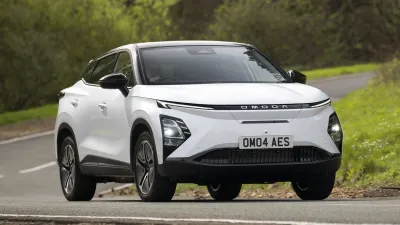
Is the 2026 OMODA E5 the Best Affordable Electric SUV in the GCC?
The 2026 OMODA E5 brings affordable electric mobility to the GCC with 430 km range, stylish design, and loaded tech. But is it worth your money? Read our full review.
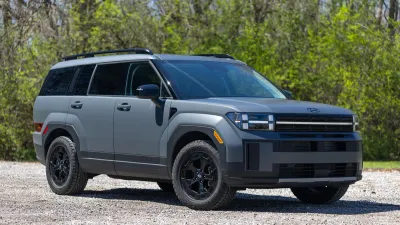
2026 Hyundai Santa Fe Review: Bold Looks, Big Value
The 2026 Hyundai Santa Fe brings bold boxy styling, three-row practicality, and GCC-friendly pricing from AED 129,000. But is it the best family SUV for the region?
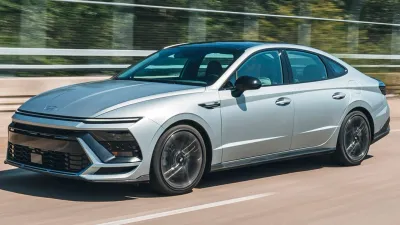
2026 Hyundai Sonata Review: Is This the Best Value Midsize Sedan for GCC Families?
Discover why the 2026 Hyundai Sonata offers exceptional value with stylish design, tech-loaded cabin, and competitive pricing in UAE and Saudi Arabia for families.