
GAC to Build Dubai R&D Hub by 2028, Targets GCC with Tailored EVs and Hybrids
Chinese automaker GAC has announced an aggressive expansion strategy for the GCC, confirming plans to establish a research and development centre in Dubai by 2028 and roll out electric vehicles, hybrids, and SUVs specifically engineered for Gulf roads and climate. The announcement came from Auto China 2026 in Beijing, where GAC laid out a roadmap that goes far beyond simply shipping cars to the region.
"GAC's goal… is not simply to expand sales volume, but to gradually move from 'entering the market' to 'taking root in the market and winning the market,'" said James Wang, Vice President of GAC International, speaking to Gulf News at the show on April 25.
That shift in strategy is the real story here. GAC is no longer content being a value-oriented entrant. It wants to build a lasting presence — with local R&D, premium products, and tailored technology for the unique demands of driving in the UAE, Saudi Arabia, and the wider Gulf.

Dubai R&D Centre: What We Know
The centrepiece of GAC's regional push is a planned R&D facility in Dubai. Wang confirmed the company is actively scouting locations.
"I think we are considering to have the R&D centre in Dubai… Two years later, in 2028 will be possible," Wang told Gulf News on April 26.
GAC already operates a Dubai operation centre handling sales, branding, service, and a MENA regional warehouse. The R&D hub would mark a significant upgrade — allowing GAC to design and test vehicles specifically for Gulf conditions rather than modifying global models as an afterthought.
Think about it: extreme summer heat, sand-laden air, long highway stretches between cities, and a growing appetite for intelligent tech. A Dubai-based R&D team can address all of that at the source.
Tailored EVs, Hybrids, and SUVs for the GCC
Here's the thing. GAC knows that dropping a standard Chinese EV into the GCC market isn't enough. Range anxiety, charging infrastructure gaps, and the punishing summer heat are real barriers. So the company is bringing a dual-pronged approach.
At Auto China 2026, GAC unveiled the AION i60 and AION N60 — dubbed the "Overseas Twin Stars" — featuring both pure EV and range-extended powertrains. That's a clever play for the GCC: full electric capability for daily city commutes, with a petrol range extender for those Dubai-to-Abu Dhabi highway runs or cross-border drives into Oman.
But that's not all. GAC also showcased the YUE7, the Aistaland GT7 (developed with Huawei), and has been actively promoting its premium Hyptec sub-brand in the region. The Hyptec SSR electric sports car and the Hyptec S9 luxury sedan are being positioned as halo vehicles for the UAE market — proof that GAC wants to compete beyond the affordable segment.
SUVs remain the primary focus for the GCC, and expect GAC's upcoming lineup to prioritise ground clearance, cabin cooling efficiency, and dust filtration — the kind of details that matter when you're driving through a sandstorm in 48°C heat.
GAC's Growing UAE Footprint
This isn't a distant promise. GAC's physical presence in the UAE is already expanding fast.
Gargash Motors, GAC's UAE distributor, opened the brand's largest showroom in the region in Deira, Dubai, back in January 2026. That facility signals serious commitment — not just a sales outlet, but a hub for service, parts, and customer trust.
Wang emphasised that localisation goes hand in hand with service infrastructure. "It's not simply to expand sales volume," he reiterated. GAC is investing in after-sales support, parts availability, and brand-building — the very areas where some Chinese brands have struggled to gain GCC buyers' confidence.
And the timing makes sense. GCC EV adoption is rising steadily, but hybrids are currently the pragmatic bridge for many drivers. Fleet operators — taxis, last-mile delivery, corporate fleets — are increasingly looking at total cost of ownership. GAC's range-extended EVs could be a strong fit for that segment.
What This Means for GCC Buyers
So what does this mean if you're shopping for a new car in the UAE or Saudi Arabia?
First, more choice. GAC is positioning itself as a serious alternative to established Japanese, Korean, and European players — not just on price, but on technology and regional fit.
Second, better-tailored vehicles. A Dubai-based R&D centre means future GAC models will be designed with Gulf drivers in mind from day one, not retrofitted for the region.
Third, a premium push. The Hyptec brand signals that GAC wants to move upstream. Don't be surprised to see six-figure AED price tags on future GAC offerings alongside more accessible volume models.
No specific pricing or launch dates for individual models have been confirmed yet. The Auto China 2026 event runs until May 2, and more details on GCC-specific rollout timelines are expected to follow.
The Bottom Line
GAC's expansion into the GCC is taking a deliberate, long-term approach. The Dubai R&D centre by 2028, the focus on range-extended EVs and hybrids, and the premium Hyptec sub-brand all point to a company that wants to be a lasting player in the region — not a flash in the pan.
For Gulf buyers, that means more competition, more tailored products, and a Chinese automaker that's finally investing in what matters most: trust, service, and vehicles built for the roads we actually drive.
Related Articles

GAC Plans Dubai R&D Hub by 2028 for GCC-Tailored EVs and SUVs
Chinese automaker GAC Group announces a Dubai R&D center by 2028, plus new EVs, hybrids, and premium SUVs built specifically for Gulf drivers. Here's what's coming to the UAE.
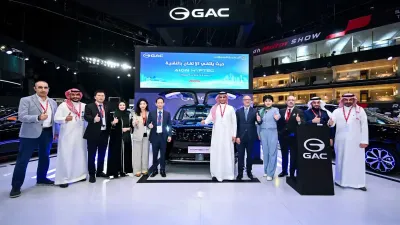
Breaking: GAC Launches Aion and Hyptec EVs in Saudi Arabia
GAC Group has officially launched its Aion and Hyptec electric vehicle series in Saudi Arabia at the Riyadh Motor Show, marking its first new energy vehicle deployment in the Middle East.
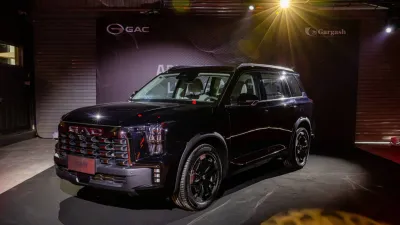
2026 GAC GS8 Lands in UAE: Prices, Specs & Traveller Variant
The 2026 GAC GS8 and off-road GS8 Traveller are now available in the UAE, starting at AED 139,900. Here's everything you need to know about specs, pricing, and hybrid options.