
Breaking: BYD Surpasses Tesla to Become World's Top Battery-Electric Vehicle Seller in 2025
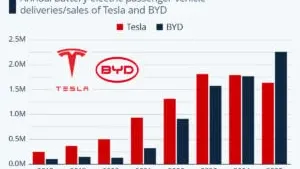
BYD has officially overtaken Tesla as the global leader in battery-electric vehicle sales for 2025, marking a historic shift in the automotive industry. The Chinese automaker sold 2,256,714 pure electric vehicles last year, compared to Tesla's 1,636,129 deliveries—a gap of over 620,000 units in BYD's favor.
This is the first time BYD has claimed the top spot in the BEV race, ending Tesla's long reign. The milestone underscores the rapid rise of Chinese electric carmakers and signals a new era of global EV competition.

Why BYD's Victory Matters for Global EV Markets
BYD's 2025 BEV sales represent a 27.9% year-over-year increase from their 2024 figures. Meanwhile, Tesla's deliveries fell approximately 9% during the same period. The numbers tell a clear story: while Tesla struggled with a stale lineup (95% of its volume still coming from the Model 3 and Model Y), BYD expanded aggressively across multiple segments.
The Chinese automaker offers everything from the micro BYD Seagull to family SUVs and luxury sedans. This diversified portfolio allowed BYD to capture market share that Tesla's premium-focused approach couldn't reach.
Here's the breakdown of BYD's total 2025 performance:
- BEV sales: 2,256,714 units (+27.9% YoY)
- PHEV sales: 2,288,709 units (-7.9% YoY)
- Total NEV production: 4,537,356 vehicles
- Overseas sales: Exceeded 1 million units for the first time (+150% YoY)
The decline in BYD's plug-in hybrid sales alongside BEV growth signals a market shift toward full electric vehicles—even within China's own automotive giant.
What This Means for GCC Car Buyers in 2026
BYD's global dominance directly impacts the UAE, Saudi Arabia, and other GCC markets where both brands compete. Chinese EVs are flooding regional showrooms, creating unprecedented choice—and pricing pressure—for consumers.
Affordable alternatives to Tesla are now mainstream. Models like the BYD Atto 3, BYD Dolphin, and BYD Seal offer competitive range and features at significantly lower price points than Tesla's Model 3 and Model Y. This shift gives GCC buyers more leverage in negotiations and could force Tesla to reconsider its premium pricing strategy in the region.
Growing dealer networks mean better service. BYD's aggressive overseas expansion includes establishing robust dealership and service networks across the GCC. This addresses a common concern about Chinese brand reliability and after-sales support.
The oversupply situation benefits you. With Chinese manufacturers producing more EVs than domestic demand can absorb, GCC markets are receiving increased allocations. This means better availability, potential discounts, and shorter waiting times for popular models.
How BYD Achieved This Historic Milestone
Several factors converged to propel BYD past Tesla in 2025:
1. Product diversity across price segments While Tesla focuses on the premium market, BYD covers everything from budget city cars to luxury vehicles. This allowed them to tap into mass-market demand that Tesla simply doesn't address.
2. Vertical integration advantages BYD manufactures its own batteries—a critical component where Tesla relies on suppliers. This control over the supply chain provided cost and production stability advantages.
3. Aggressive international expansion BYD's overseas sales skyrocketed 150% year-over-year, surpassing 1 million units for the first time. The GCC markets were a significant part of this growth story.
4. Government support and domestic scale China's EV infrastructure and policy support created a fertile ground for BYD to achieve economies of scale before exporting globally.
Tesla's Challenges and What Comes Next
Tesla's 9% delivery decline in 2025 highlights the limitations of relying on two aging models for most sales. The Cybertruck's niche appeal and delayed next-generation platform left Tesla vulnerable to BYD's broad offensive.
Industry analysts note that "BYD is now winning [the all-electric] game," according to Electrek's analysis. The question isn't whether BYD can maintain its lead, but how Tesla will respond.
For GCC markets, this competition means:
- More choice between premium Tesla experiences and value-focused BYD offerings
- Potential price adjustments as brands fight for market share
- Faster technology adoption with both companies pushing innovation
- Improved charging infrastructure as EV adoption accelerates
The Bottom Line for GCC Car Shoppers
BYD's 2025 victory over Tesla isn't just a statistical milestone—it's a market reality that will shape your car-buying decisions throughout 2026. The balance of power in electric vehicles has shifted, and consumers are the winners.
When considering your next EV purchase, you now have:
- Genuine alternatives to Tesla that don't compromise on range or features
- Stronger negotiating position due to increased competition
- More established service networks for Chinese brands
- Greater confidence in EV technology as market leaders evolve
The electric vehicle revolution just got more interesting. With BYD claiming the crown and Tesla needing to respond, GCC buyers can expect continued innovation, competitive pricing, and expanding options throughout 2026.
Source: Electrek.co, best-selling-cars.com
Related Articles
BYD Overtakes Tesla as World's Top EV Seller in 2025 – What It Means for GCC Buyers
BYD sold 2.26 million electric vehicles in 2025, surpassing Tesla for the first time. Here's how this shift affects pricing and availability in GCC markets like UAE and Saudi Arabia.
Tesla Opens Second Centre in Jeddah — What It Means for Saudi EV Buyers
Tesla has opened its second centre in Jeddah at the Auto Mall, bringing the Model 3, Model Y, and Cybertruck closer to Saudi buyers. Here's everything you need to know.
Tesla Just Opened Its Second Saudi Showroom in Jeddah - Here's What's Available
Tesla's new Jeddah Auto Mall centre offers Model 3, Model Y, and Cybertruck with Saudi pricing. Charging network expands across the Kingdom.