
Breaking: 2026 Oil Crisis Could Push GCC Buyers to Chinese EVs, Report Warns
A new Gulf News report is sounding the alarm: the 2026 oil crisis could trigger a seismic shift in GCC car buying habits, mirroring the 1973-74 oil embargo that pushed American drivers toward Japanese imports. This time, analysts predict Chinese EVs will be the beneficiaries as fuel prices soar and regional conflict disrupts supplies.
The ongoing US-Israel strikes on Iranian oil facilities since late February 2026 have escalated dramatically. Iran has responded by blocking the Strait of Hormuz—which handles 20% of global oil supply—and targeting neighboring Gulf facilities. The result? Severe supply disruptions and Brent crude hitting $112 per barrel on March 19, with no end to the conflict in sight.
Here's the thing: history might be repeating itself. And the implications for what you drive in the UAE, Saudi Arabia, and across the Gulf could be profound.

The 2026 Oil Crisis: Strait of Hormuz Blocked, Brent at $112
The current situation is a perfect storm for fuel prices. With the Strait of Hormuz blocked and key export hubs like Kharg Island under attack, global oil markets are in turmoil. Brent crude's climb toward $112 per barrel is just the beginning, with analysts warning of broader price increases across food, fertilizers, and other essentials.
For GCC residents, this isn't a distant geopolitical issue—it's hitting at the pump. The UAE saw petrol prices jump by AED 0.80 and diesel by a staggering AED 1.97 in April 2026. In Saudi Arabia, Premium 98 now costs SAR 3.83 per liter. These increases are directly tied to the regional conflict and supply chain disruptions.
But that's not all. The crisis shows no signs of easing, meaning Gulf drivers could be facing sustained high fuel costs for the foreseeable future. This economic pressure is already changing how people think about their next car purchase.
Echoes of 1973: From Japanese Imports to Chinese EVs
The Gulf News report draws direct parallels to the 1973-74 OPEC oil embargo. Back then, oil prices quadrupled overnight, causing shortages and legendary gas station lines across America. Consumers responded by ditching their V8 gas-guzzlers for fuel-efficient Japanese imports.
Here's what happened historically:
- Japanese automakers' market share in the US surged from ~9% in 1976 to 21% by 1980
- Japanese imports captured 28% of the US market by the late 1980s
- The Big Three American automakers suffered devastating sales drops: GM down 34%, Ford down 47%
The pattern is clear: when fuel becomes expensive and unreliable, consumers seek alternatives. In the 1970s, it was Japanese compacts like the Honda Civic and Toyota Corolla. In 2026, the report suggests Chinese electric vehicles will play that same disruptive role.
Current Market Shifts: EV Shopping Activity Jumps to 22.4%
The data already shows consumers are responding to pump price pressures. According to Edmunds, electrified-vehicle research jumped to 22.4% of all shopping activity in early March 2026—up from 20.7% just weeks earlier. That's a significant shift in consumer interest in real time.
Analysts from CarGurus and other industry watchers confirm the trend: hybrid and EV interest rises directly with fuel prices. What makes 2026 different is the scale of the crisis and the maturity of the electric vehicle market—particularly from Chinese manufacturers.
And the best part? Chinese EVs offer more than just fuel savings. They bring advanced technology, competitive pricing, and features that rival established Western and Japanese brands. With Western tariffs weakening and markets worldwide opening up to Chinese vehicles, the timing couldn't be better for a market shift.
GCC Impact: Fuel Prices Skyrocket as Regional Conflict Escalates
For GCC residents, the crisis hits particularly hard. Our region's car culture has traditionally favored larger, more powerful vehicles—exactly the kind that become expensive to operate when fuel prices spike. The recent price increases are just the beginning if the conflict continues blocking the Strait of Hormuz.
Consider these GCC-specific factors:
- Extreme summer heat requires powerful air conditioning, increasing fuel consumption in conventional vehicles
- Long highway drives between cities become significantly more expensive
- Urban traffic in Dubai, Riyadh, and other metro areas means frequent stops and starts, hurting fuel economy
These conditions make the switch to electric vehicles even more compelling. Chinese EVs, with their competitive pricing and advanced battery technology suited for hot climates, are uniquely positioned to address these regional challenges.
Why Chinese EVs Are Positioned to Win in the Gulf
Chinese manufacturers like BYD, NIO, Zeekr, Geely, and Chery have been preparing for this moment. They offer several key advantages that align perfectly with GCC market needs during a fuel crisis:
Zero Fuel Costs: The most obvious benefit—no more visits to the pump as petrol prices fluctuate wildly.
Lower Lifetime Costs: Despite potentially higher upfront prices, total cost of ownership often beats conventional vehicles when fuel is expensive.
Advanced Technology: Many Chinese EVs lead in infotainment, driver assistance features, and battery technology.
Aggressive Pricing: Chinese brands typically undercut established competitors on price while offering comparable or better features.
Climate Adaptation: Batteries and cooling systems designed to handle extreme heat make them well-suited for GCC summers.
The report notes that EVs become particularly compelling when oil stays above $100 per barrel—exactly where we are now. With stable electricity from growing renewable sources (solar, wind, and hydro) in the GCC, the charging infrastructure argument weakens against volatile fuel availability.
What This Means for GCC Car Buyers
If the 1973 parallel holds true, we could be at the beginning of a major market realignment. GCC consumers, faced with sustained high fuel prices, may begin abandoning traditional preferences for large SUVs and luxury sedans in favor of more economical electric alternatives.
Here's what to watch for in the coming months:
- Increased marketing and dealership presence from Chinese EV brands across the UAE, Saudi Arabia, and other Gulf states
- Potential government incentives to accelerate EV adoption as part of broader economic diversification strategies
- Faster development of charging infrastructure to support growing EV populations
- Price adjustments from traditional automakers trying to compete with Chinese EV value propositions
The shift won't happen overnight, but the conditions are aligning for a significant change in Gulf automotive markets. Just as Japanese cars went from novelty to mainstream in the 1970s and 1980s, Chinese EVs could follow the same trajectory in the 2020s and beyond.
The Bottom Line: A Potential Market Transformation
The Gulf News report serves as both a warning and a prediction. The 2026 oil crisis, with its direct impact on GCC fuel prices, could accelerate an automotive transition that was already underway. Chinese electric vehicles—with their combination of affordability, technology, and fuel-free operation—are positioned to benefit exactly as Japanese imports did five decades ago.
For GCC car buyers, the message is clear: the economics of car ownership are changing rapidly. As fuel prices remain volatile due to regional conflict, the case for electric vehicles grows stronger every day. And with Chinese manufacturers offering compelling alternatives at competitive prices, the next time you visit a showroom, you might be looking at a very different set of options than you expected.
The 1973 oil crisis reshaped the global automotive industry for a generation. The 2026 crisis might just do the same—with Chinese EVs playing the role that Japanese compacts did back then. Only time will tell, but the parallels are too striking to ignore.
Related Articles

2026 Infiniti QX80 Debuts in UAE — Starts at AED 425,000
The all-new 2026 Infiniti QX80 full-size luxury SUV has made its Middle East debut in Dubai. UAE sales start December 2026, with prices from AED 425,000.
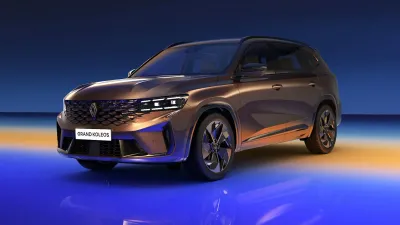
2026 Renault Grand Koleos Lands in the UAE From AED 117,000
The 2026 Renault Grand Koleos has arrived in the GCC, with UAE pricing from AED 117,000. Three variants, bold premium design, and 20-inch alloys — here's everything you need to know.

2026 Hyundai Palisade Hybrid: 5 Things to Know Before It Hits the GCC
The 2026 Hyundai Palisade Hybrid brings a 2.5L turbo hybrid powertrain and over 1,000 km range to the GCC. Expected UAE pricing from AED 160,000 — here's everything we know.